Pastry culture / 26 November 2026
Top 10 Best French Pastries
From Paris-Brest to madeleines, discover ten French classics, the techniques that define them and the first free lesson with each VoilaChef chef.
VoilaChef
26 November 2026
VoilaChef offers

The Paris-Brest tops our list. A ring of choux pastry, flaked almonds and praline cream bring together a crisp shell, a soft centre and the flavour of toasted nuts. The mille-feuille and the éclair complete our top three. One cracks into golden layers under your fork, while the other holds a generous filling inside a delicate shell.
We chose these ten classics for how they taste, what makes them stand out in a pâtisserie window and the skills they can teach you. Each photograph shows a pastry made by one of our chefs, and the first lesson of every course is free to watch.
Ten French pâtisserie classics at a glance
| Rank and pastry | What sets it apart |
|---|---|
| 1. Paris-Brest | A ring of choux filled with praline cream |
| 2. Mille-feuille | Three sheets of puff pastry that crack under a fork |
| 3. Éclair | A long, slender shell filled right to the ends |
| 4. Lemon meringue tart | A sharp lemon filling under a soft, sweet meringue |
| 5. Fraisier | Halved strawberries around the outside of the cake |
| 6. Tarte Tatin | Caramelised apples revealed when the tart is turned out |
| 7. Saint-Honoré | Little choux buns topped with caramel |
| 8. Flan pâtissier | A neat slice with a soft custard filling |
| 9. Parisian macaron | Two almond shells with a fine ruffled edge |
| 10. Madeleine | A shell-shaped underside and a soft crumb beneath the hump |
1. Paris-Brest, a choux ring with praline cream
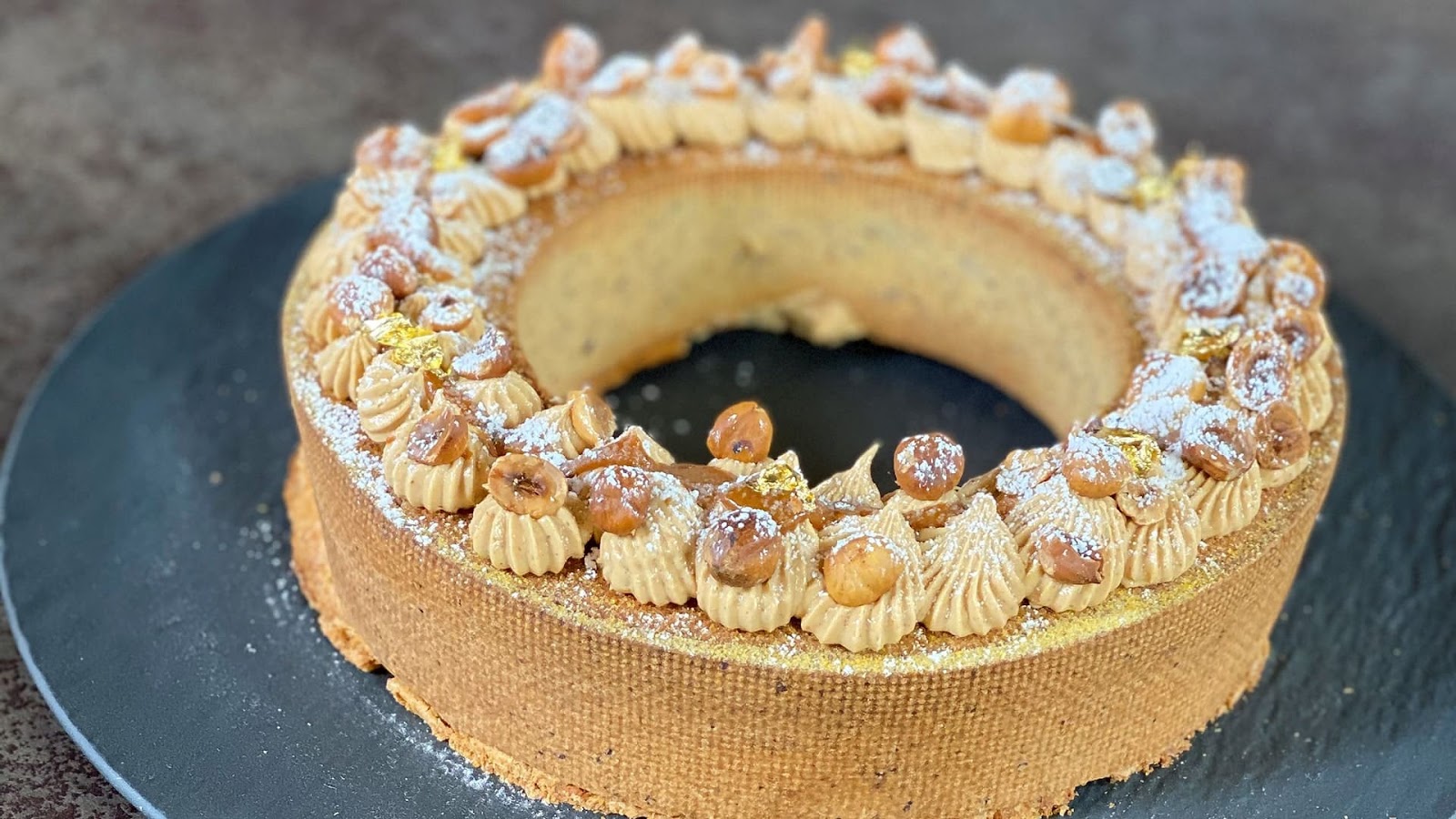
Why a ring? According to Maison Durand, Louis Durand devised the wheel-shaped pastry in 1910 in honour of the Paris–Brest–Paris cycling race. Flaked almonds turn golden on top as the ring bakes. The praline mousseline brings the flavour of roasted hazelnuts or almonds. The story of Maison Durand.
At home, let the ring cool on a wire rack before slicing it open. This lets the steam escape and helps the piped cream hold its shape. Our traditional Paris-Brest recipe takes you through the assembly. In the version pictured here, Desty Brami and Bruno Ciret add a crisp hazelnut sablé. You can follow along from the first lesson, which shows how to make the sweet hazelnut pastry. Anne Coruble’s Paris-Brest with grains, shown on the cover, pairs the choux with a whipped buckwheat ganache.
2. Mille-feuille, three crisp layers of pastry
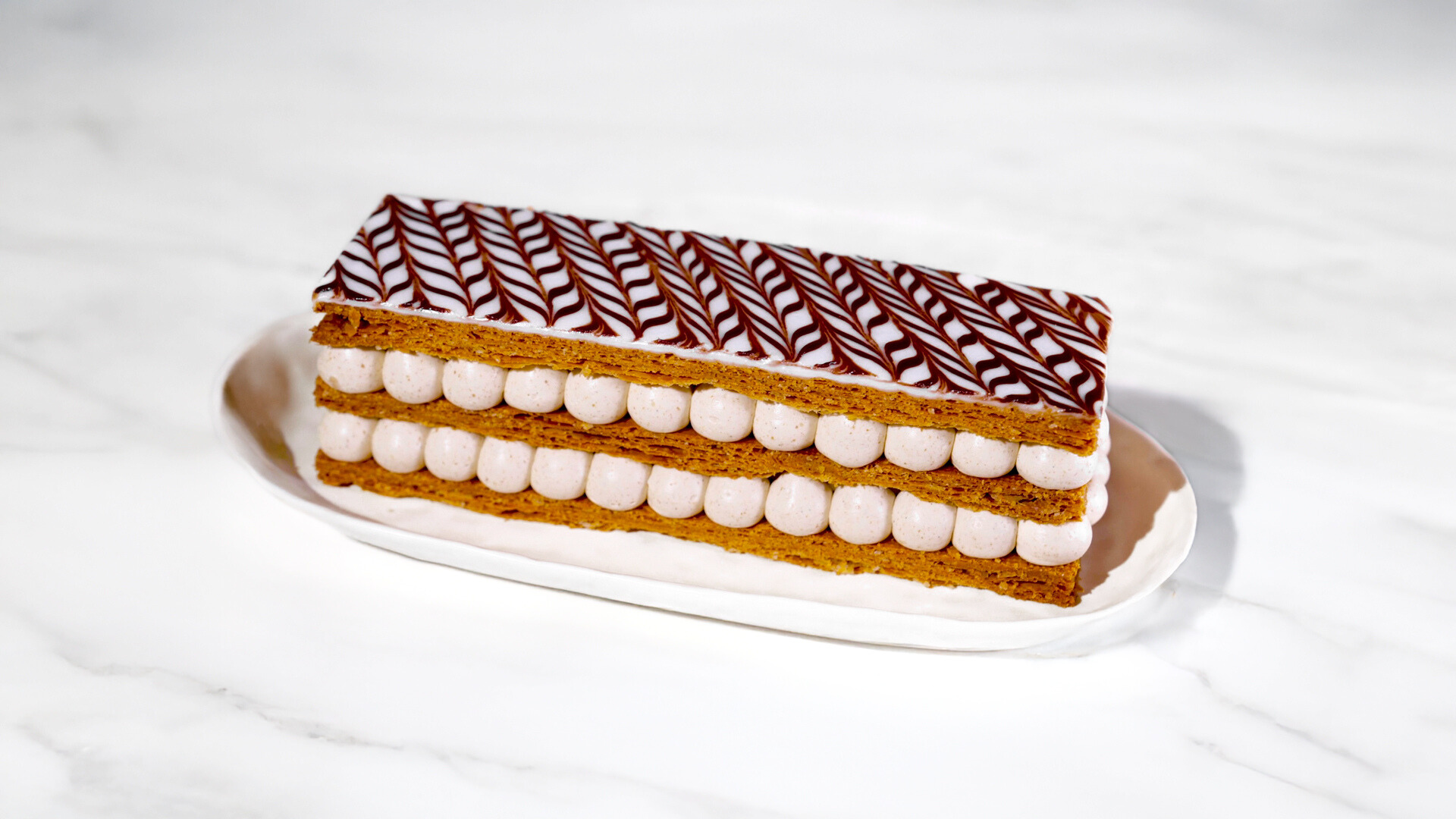
Three sheets of golden puff pastry and two layers of cream. You can tell it has worked at the first bite, when the pastry shatters and the cream stays in place. Assemble the cooled pastry shortly before serving to keep that contrast. The work that makes the sheets even happens much earlier, when you roll and fold the puff pastry.
Jeffrey Cagnes infuses the milk for his pastry cream with caramelised trimmings. He then folds in whipped cream to make a lighter crème diplomate, so the flavour of the pastry comes through in the filling as well. In his first lesson, he shows how to knead the détrempe, the dough that forms the base of the puff pastry.
3. Éclair, filled right to the ends
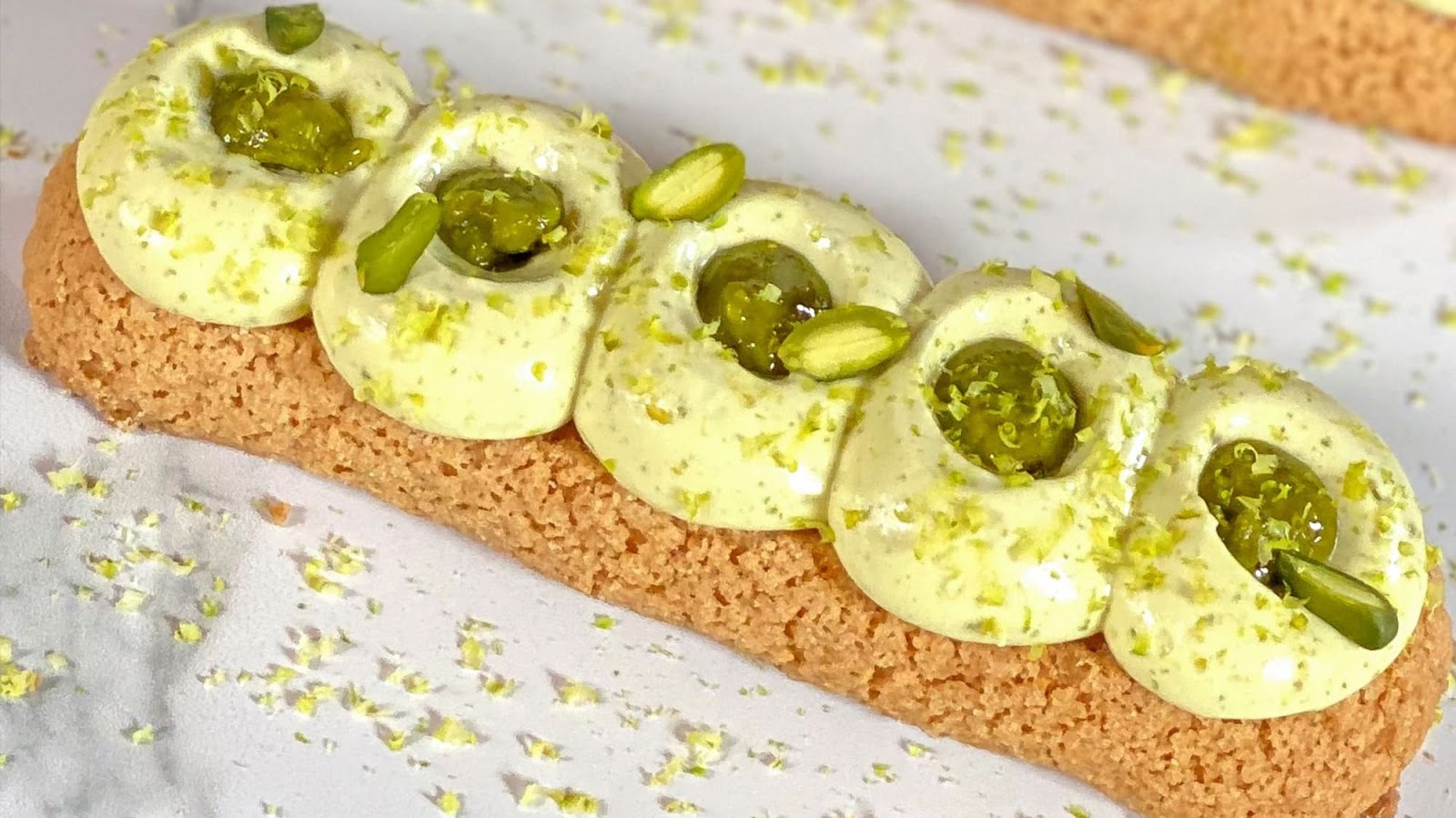
Coffee, chocolate or pistachio, an éclair is recognisable by its shape. Pipe an even length of choux and it will rise evenly in the oven. Once the shell has cooled, pipe the cream in through several holes along the underside so it reaches both ends. If your éclairs stay doughy in the middle, start with our guide to choux pastry consistency and baking.
Nicolas Paciello uses pistachio twice in his éclair. A whipped ganache keeps the filling light, while the praline brings out the flavour of the roasted nuts. His free lesson shows how to make the pistachio praline.
4. Lemon meringue tart, sharp and sweet in the same bite
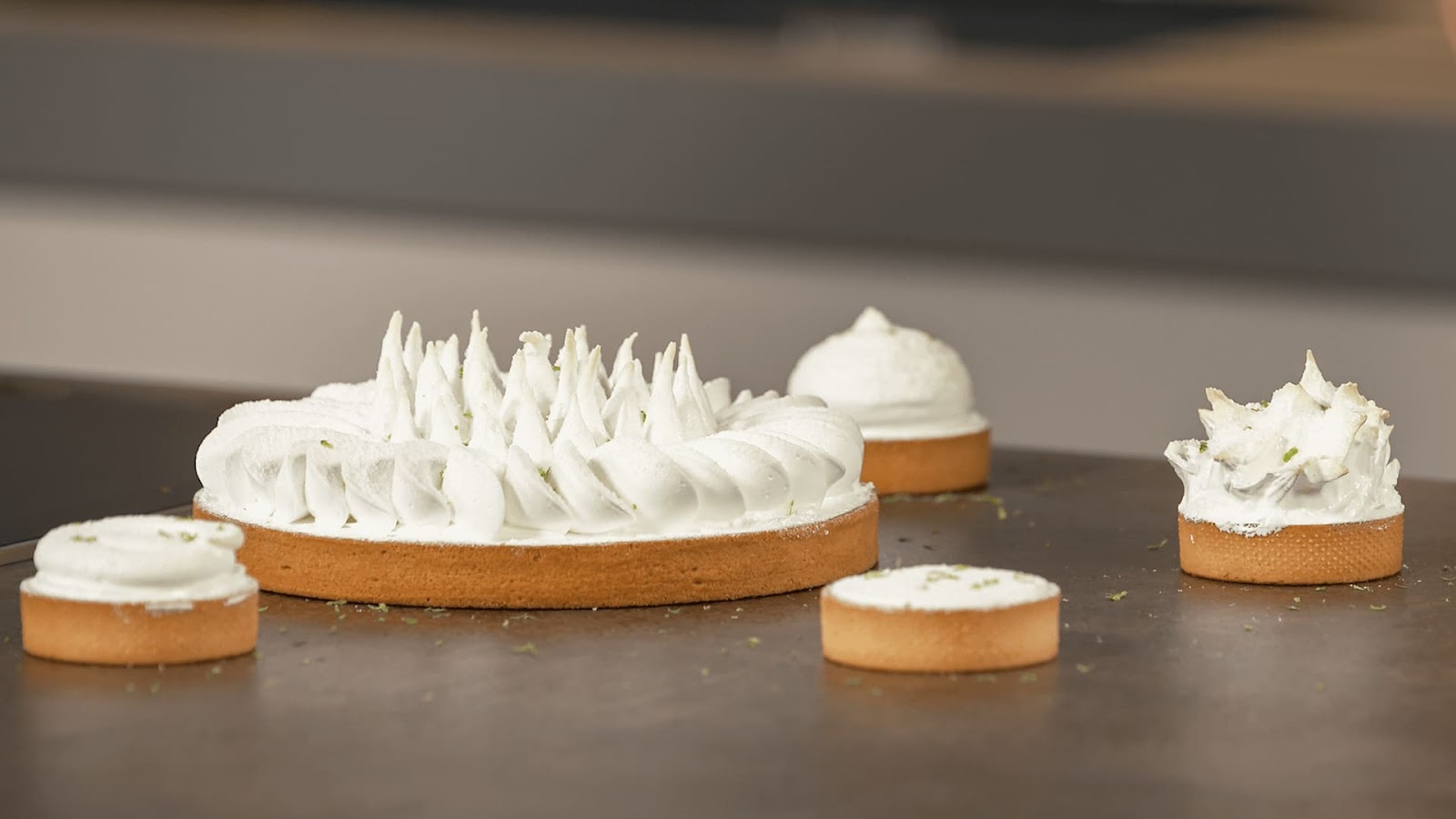
The best bite catches all three layers. The sweet pastry gives it snap, the lemon cream gives it a sharp edge and the meringue softens it with a touch of sweetness. The first step is to bake the tart case blind and let it cool before filling. Our lemon meringue tart recipe shows you the order in which to prepare each layer.
Desty Brami and Bruno Ciret finish theirs with Italian meringue. Pouring hot syrup into the egg whites as they whip gives a meringue that holds the shape left by the piping nozzle. Their course begins with the sweet pastry that holds the lemon cream. Our guide to meringue explains how the French, Swiss and Italian methods differ.
5. Fraisier, edged with fresh strawberries
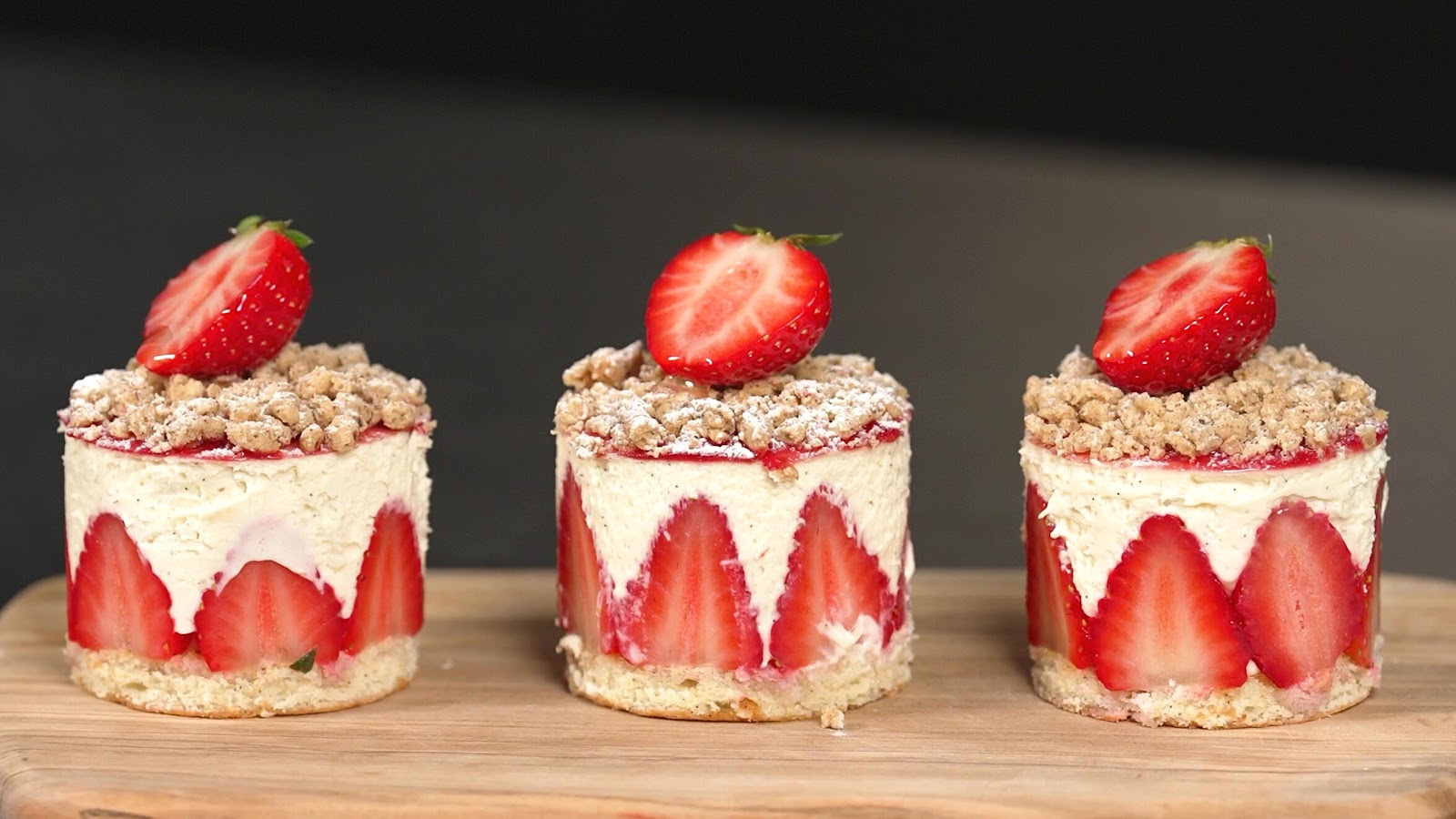
The strawberry halves around the sides give a classic fraisier its distinctive look. Set them with the cut sides against the cake ring, then work the cream down between the fruit. When you lift off the ring, the strawberries should stand out cleanly against the cream, which should fill every gap down to the sponge. A well-emulsified crème mousseline is firm enough to hold the cake together and still soft enough to eat with a spoon.
Angelo Musa, one of the Meilleurs Ouvriers de France teaching at VoilaChef, pairs pain de Gênes sponge with vanilla mousseline and finishes the cake with crisp streusel. In the free lesson, he prepares the strawberry confit that deepens the flavour of the fresh fruit.
6. Tarte Tatin, with soft apples and glossy caramel
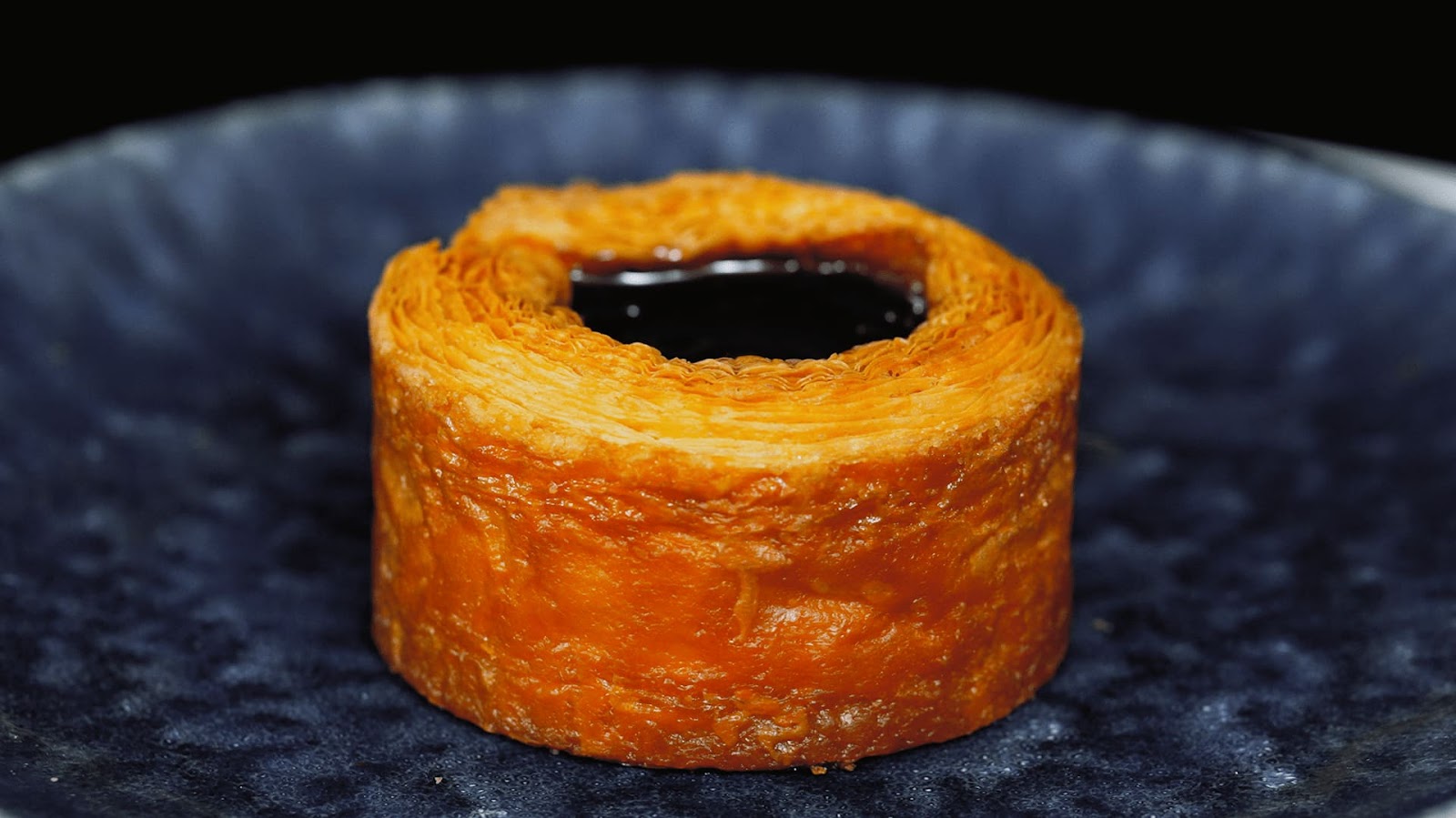
The tart takes its name from the sisters who ran a hotel in Lamotte-Beuvron, in the Sologne region. Baking it upside down gives the apples their soft texture. They cook tightly packed against the base of the tin, beneath the pastry. When you turn the tart out, they sit on top, glistening with caramel. Cut the apples into pieces of a similar size so they all soften while still holding their shape. The story of tarte Tatin in Sologne.
Our tarte Tatin recipe is a version you can make at home. Pierre-Jean Quinonero makes individual tarts with cider caramel and a laminated Vienna bread dough. His first lesson covers kneading and proving the dough for the first time.
7. Saint-Honoré, topped with caramel-glazed choux
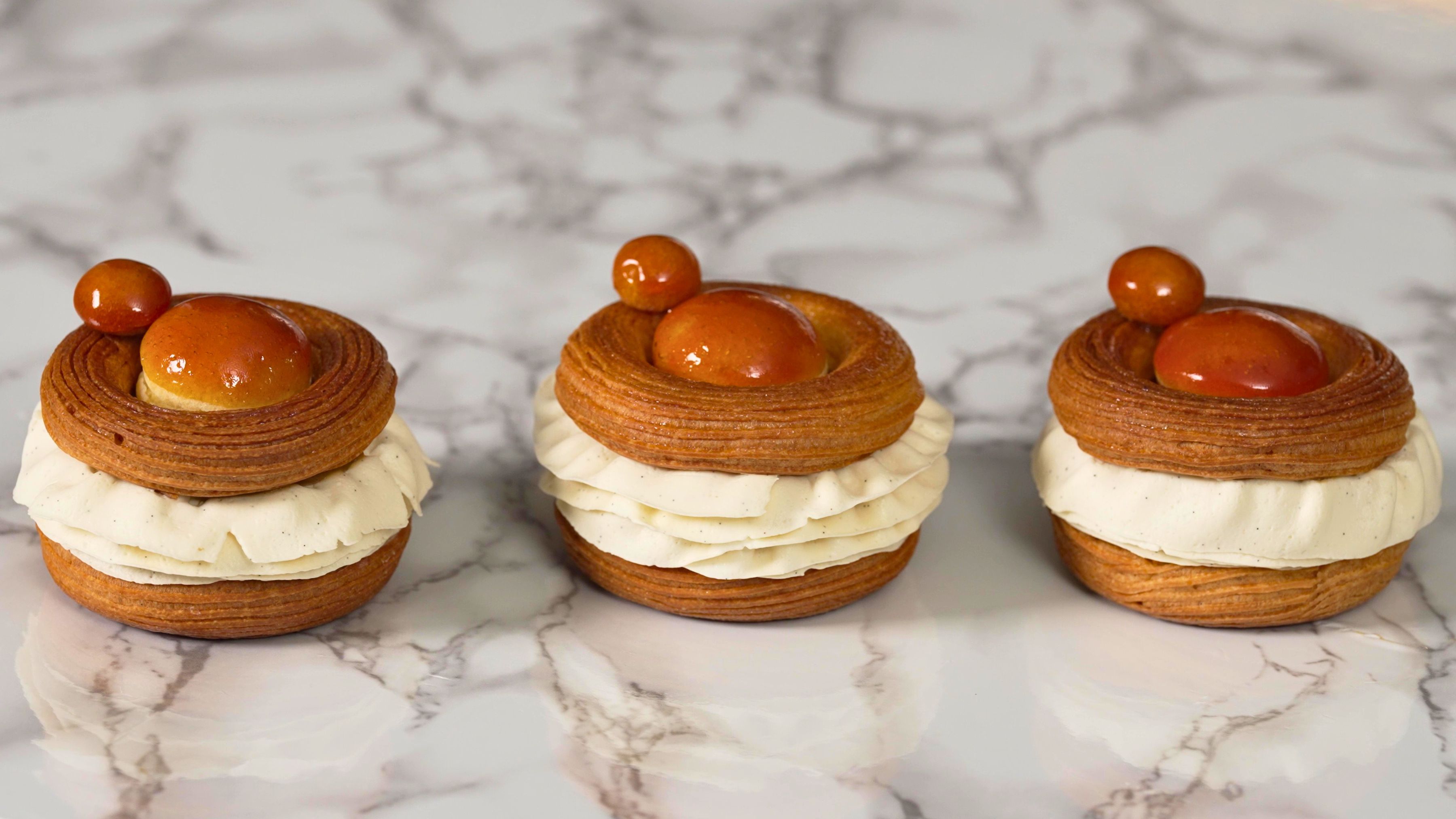
First comes the crack of caramel on the little choux buns, then the softness of the cream and the crunch of the base. To get that contrast, prepare and cool each element before filling the buns and piping the cream into the centre. How you hold the piping bag and angle the nozzle makes a difference to the finish.
For her signature Saint-Honoré, Anne Coruble bakes choux inside croissant dough and finishes it with a lace-like pattern of piped Chantilly. Her free lesson covers the Tahitian vanilla and mascarpone Chantilly.
8. Flan pâtissier, a vanilla custard that slices cleanly
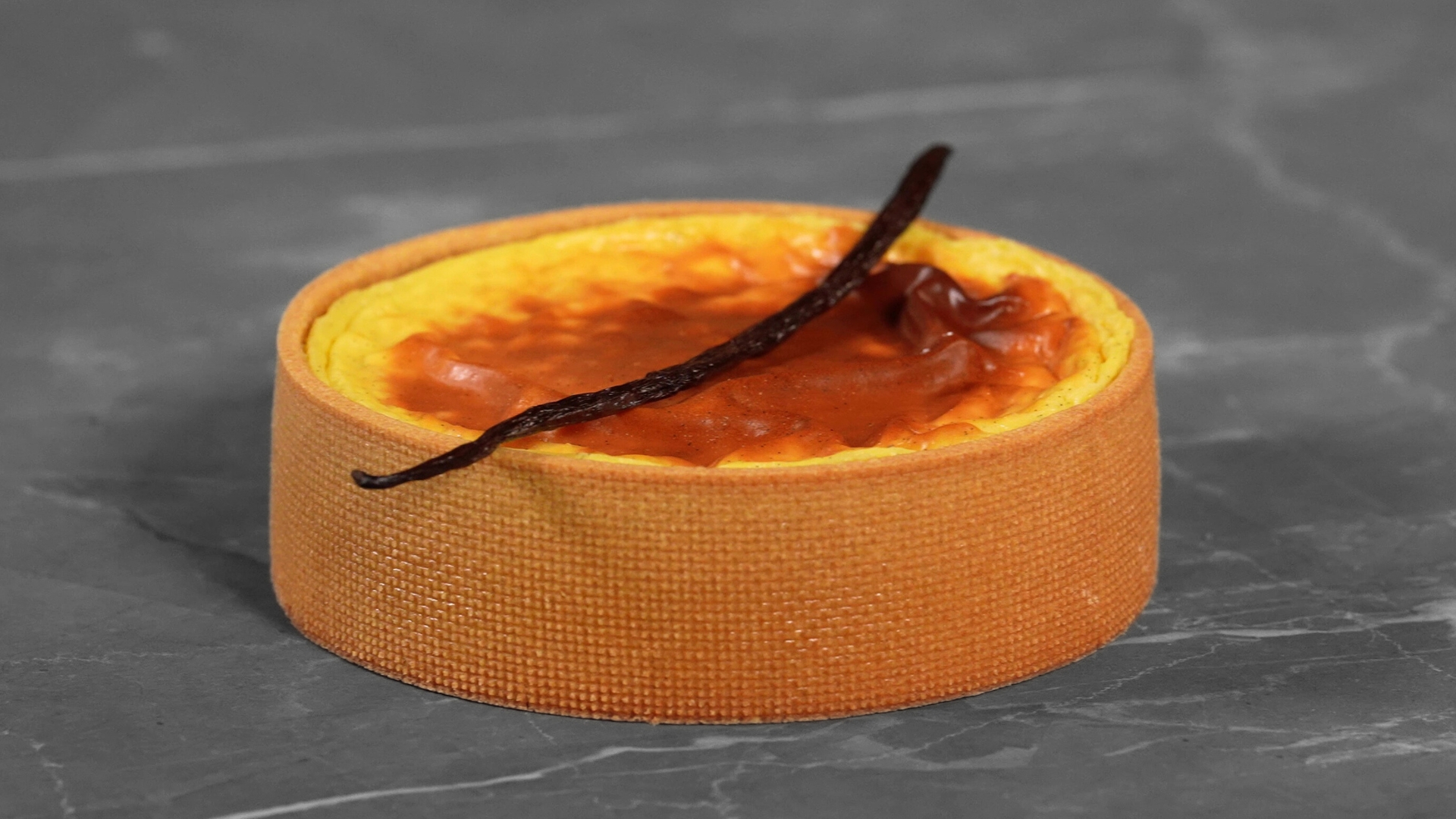
You should be able to pick up a slice of flan, with the custard still soft enough to melt in your mouth. Starch thickens the milk and egg mixture as it cooks. Cooling sets it just enough to cut a clean slice. If your flan is too firm, our guide explains how to adjust the proportions of the custard mixture.
Julien Chamalo uses vergeoise, a soft brown sugar, in his sweet pastry to give the custard a crisp shell. His first lesson shows how to make the vergeoise pastry. For your first try at home, keep our vanilla flan pâtissier recipe to hand.
9. Parisian macaron, with a fine ruffle at the base
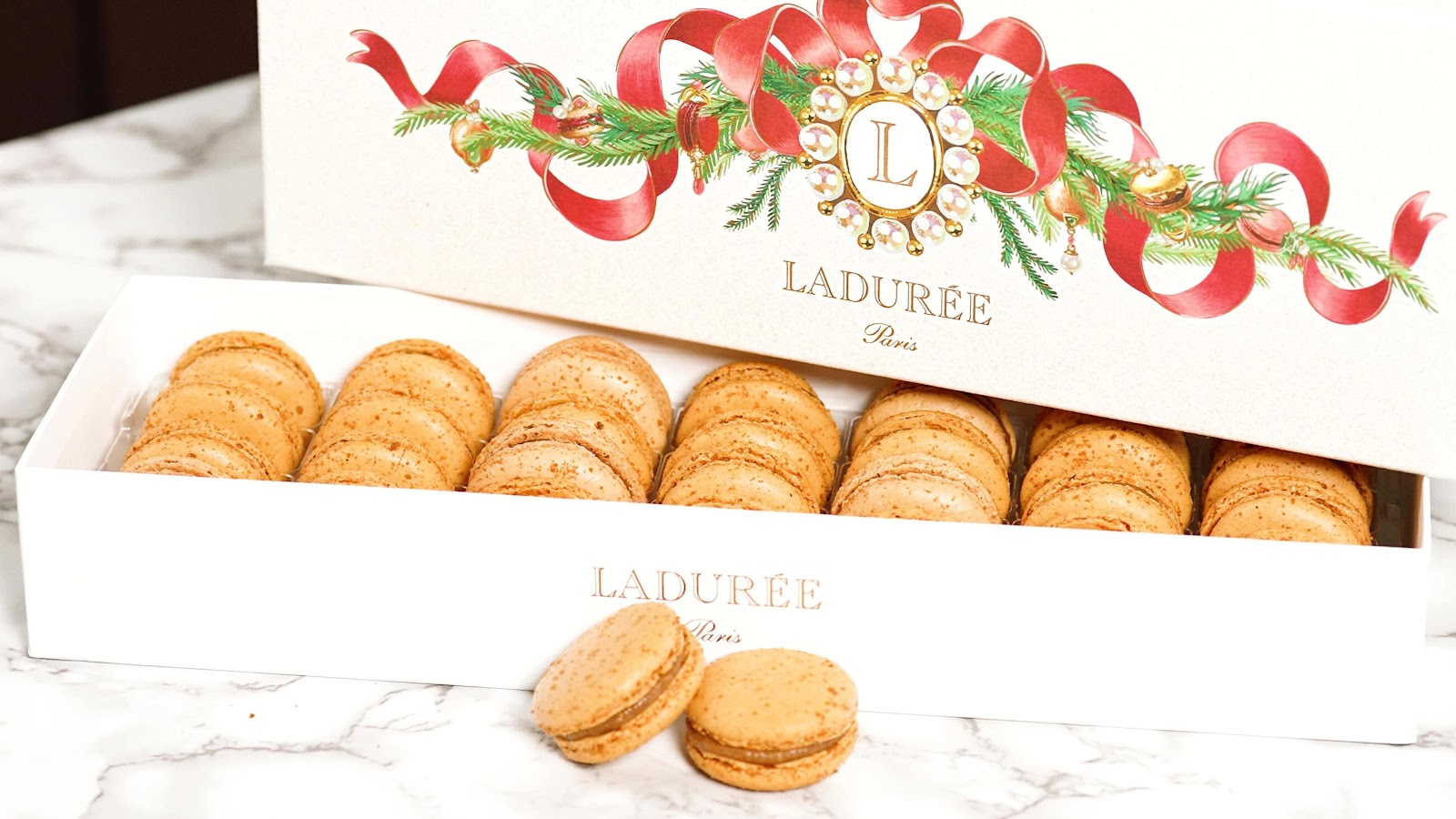
A Parisian macaron sandwiches a filling between two almond shells. The little ruffle at the base of each shell is called its foot. Before piping, lift the spatula to check the batter. It should fall in a ribbon whose outline slowly disappears. Our guide to making macaron shells explains this folding technique, known as macaronage.
Julien Alvarez fills his macarons with a spiced speculoos cream. His course starts with making the speculoos biscuit that flavours the filling. The shells come later in the course.
10. Madeleine, golden at the edges and soft in the middle
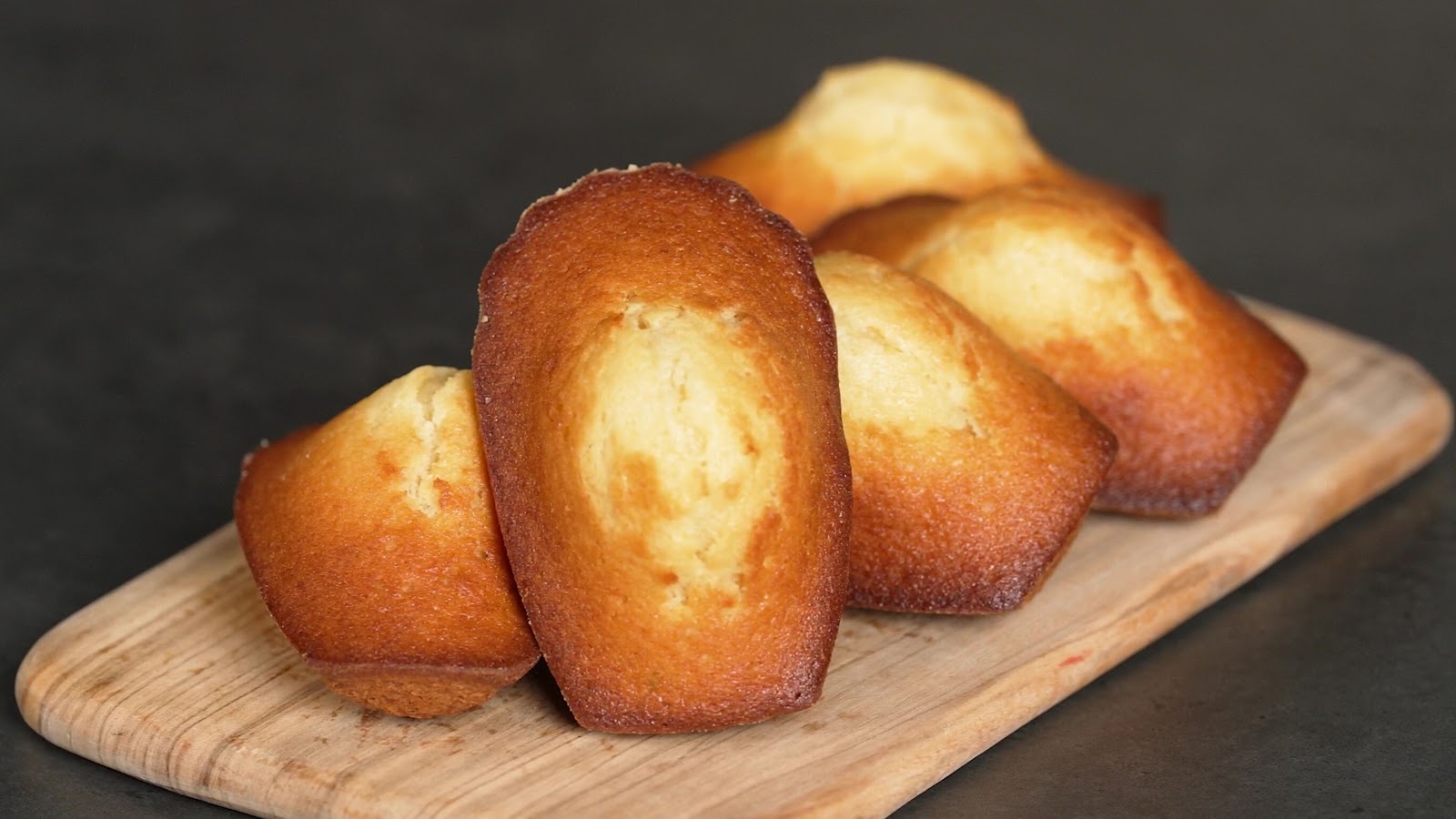
Associated with Commercy in Lorraine, the madeleine is easy to recognise by its shell shape and its hump. The edges brown most where the batter touches the metal. Fill each hollow with the same amount of batter so you can take the whole tray out at once without drying out the smallest madeleines. The Commercy madeleine.
Maxence Barbot makes large madeleines and soaks them in honey scented with lemon zest. His lesson on making madeleine batter is a good place to start if you are new to pâtisserie. Keep our soft lemon madeleine recipe to hand when you try the method at home.
Which pastries are most popular in France?
In an OpinionWay poll for the Salon de la pâtisserie on 3 and 4 May 2023, fruit tarts and fraisier came joint first, each named by 40% of the 1,024 adults surveyed. Respondents could name more than one favourite. The éclair and religieuse were grouped together and came next, at 36%. We put the Paris-Brest first for its combination of choux and praline, and because piping the ring is such a useful skill to learn. OpinionWay survey results, pages 9 and 10.
Which French pastry should you learn to make first?
If you’re new to pâtisserie, start with a madeleine. Then choose a course based on the skill you want to practise. Each link takes you to the first free lesson.
- For your first afternoon bake, try Maxence Barbot’s honey and lemon madeleines. He shows you how to make the batter before you fill the moulds.
- For a dessert you can make a day ahead, choose Julien Chamalo’s vanilla flan. You start with the sweet vergeoise pastry. Once the flan is baked and cooled, you can refrigerate it overnight.
- To practise using a piping bag, move on to Desty Brami and Bruno Ciret’s Paris-Brest sablé. The first lesson covers the sweet hazelnut pastry. Piping the ring comes later.
- To put several techniques together, save Anne Coruble’s vanilla Saint-Honoré for a day when you have time for the choux, the caramel and the decoration. She opens with the Tahitian vanilla and mascarpone Chantilly.
To find out where these classics came from, read our guide to the history of pâtisserie in France. If you’re curious how the French mille-feuille compares with a Portuguese pastel de nata or a baklava, explore ten pastries from around the world.