Blog / 21 October 2026
Sébastien Chevallier, MOF Baker: a portrait of a teacher
An MOF Baker since 2011, a teacher in Vesoul and an international trainer, Sébastien Chevallier shares his career and four bakery courses on VoilaChef.
VoilaChef
21 October 2026
In this story
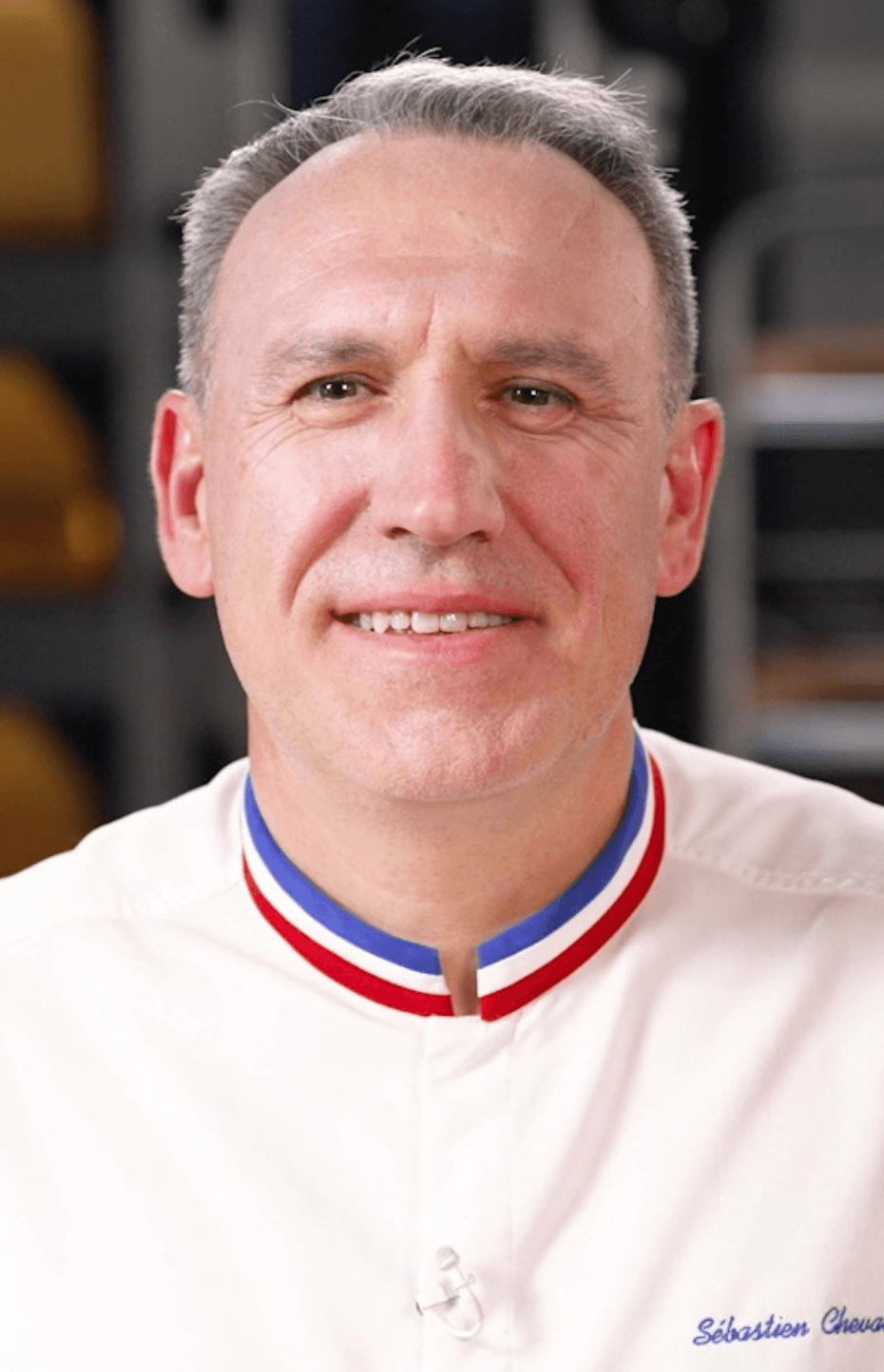
Sébastien Chevallier has held the title of Meilleur Ouvrier de France in Bakery since May 2011. He has taught at the Vesoul apprenticeship training centre since 2009 and now trains professionals in France and abroad. His career has been far from a straight line: pre-apprenticeship at 15, two years baking aboard a warship, a pastry CAP taken independently at 27, then competitions. That explains why his name comes up whenever a baker wants to improve their understanding of fermentation or bread decoration.
At a glance
- MOF Baker, 2011, and bakery teacher at CMA Formation Vesoul since 2009.
- Entered the trade at 15 through a pre-apprenticeship, followed by an apprenticeship and a bakery CAP.
- Two years at sea, based in Brest, producing bread and viennoiseries aboard a warship.
- Pastry CAP at 27 as an independent candidate, followed two years later by a bakery master craft qualification.
- Author of Pains party : mes techniques de décor pas à pas, published in 2015: 95 pages of templates, masks and stencils.
- Four courses on VoilaChef, from Beginner (traditional French baguette) to Expert (pain party).
From pre-apprenticeship at 15 to the MOF title
It began early, without a career plan. At 15, Sébastien Chevallier discovered baking through a pre-apprenticeship. The following year, he started an apprenticeship and went on to earn his bakery CAP. Up to that point, it was a familiar route: the path taken by thousands of young people entering a bakery through work-based training.
What changed was what came next. After his military service, he returned to the business where he had trained. He then worked for two other artisan bakers, with a clear aim: to deepen his knowledge of sourdough and fermentation. This was the turning point. Why does dough rise? Why does a starter lose its balance? Why is a crumb open or tight? These were the questions that held his attention, and a recipe alone could not answer them.
That curiosity helps explain the rest of his career. The MOF title did not reward a gifted beginner; it recognised someone who had spent around fifteen years comparing working methods in different bakeries.
Baking at sea: his time in the Navy
He carried out his military service in Brest, spending two years aboard a warship. The routine is easy to describe and harder to live: at sea, he was the baker, making bread and viennoiseries for the crew. In port, he worked as a provisions clerk, helping manage the kitchen and its ingredients.
This detour reveals a lot about how he works.
- Volume comes first. Feeding a whole crew every day, without emergency deliveries or a shop next door.
- Constraints set the framework. Limited space, limited equipment and schedules that cannot be negotiated.
- Stock management. A provisions clerk learns to count before kneading.
In other words: consistency, planning and a practical outlook. These habits also shape the way he explains fermentation: always linked to what the dough is actually doing at six in the morning.
A pastry CAP at 27, then a master craft qualification
At 27, Sébastien Chevallier sat another examination. He was broadening his practice rather than changing trade: he took his pastry CAP as an independent candidate. It made sense. A baker who understands laminated yeast doughs, creams and finishing techniques approaches viennoiseries and savoury bakery products differently.
Two years later, he earned a brevet de maîtrise in bakery, a French master craft qualification. This is more than a certificate to display: it recognises the ability to supervise, organise production and teach. By his own account, it also opened the door to competitions.
The sequence matters: first the CAP, then the master craft qualification, then competition. Many professionals reverse the order and wear themselves out trying to stand out before structuring their practice.
The French Cup, the 2010 European Cup and MOF 2011: the timeline
Once he had his master craft qualification, events followed quickly.
- French Cup. Two appearances, followed by first place in artistic decoration, which earned him a place on the French national bakery team.
- European Cup, 2010. In his second year with the team, France took first place in the European Bakery Cup.
- MOF selections, 2010. That same year, he entered the qualifying rounds of the Un des Meilleurs Ouvriers de France competition and reached the final.
- May 2011. He was awarded the Meilleur Ouvrier de France title in Bakery.
The final competition is often misunderstood: it is not a one-day championship. Preparation takes months. The 2011 bakery intake included six laureates, following a final held at the INBP in Rouen (results and background, in French). The tricolour collar recognises complete mastery, including decorative work, which explains the importance of artistic skills in his career.
Pain Party: teaching decoration in 95 pages
In 2015, he published Pains party : mes techniques de décor pas à pas with Les Itinéraires, in the INBP collection. Ninety-five pages of templates, masks and stencils. The book goes beyond a set of designs: it details the equipment, techniques and recipes needed to build a decorative piece from bread dough (book details, in French).
Why give this so much space in a portrait of a teacher? Because decoration is often overlooked in bakery training. Bakers learn to make good bread, but less often how to make it spectacular. In a shop, a pain party piece does two jobs: it fills a display and tells a story about craftsmanship. It is both a commercial asset and a technical discipline.
A book of templates is also a way to teach without relying on a particular place or time. Five years before his filmed courses, he had already chosen this approach: show each step, with reference points alongside it.
What he has taught at Vesoul since 2009
Since 2009, Sébastien Chevallier has been a bakery teacher at CMA Formation Vesoul, formerly the Haute-Saône apprenticeship training centre. He trains apprentices from CAP to master craft qualification. This covers the whole progression: fundamental gestures, then the levels that call for reading dough, planning production and explaining decisions.
The centre offers the bakery CAP, bakery BP and a specialist bakery certificate at 5 rue du Talerot in Vesoul (centre information, in French). There is a useful connection here: an MOF who took a pastry CAP independently also teaches within the traditional apprenticeship system. Both routes have something to learn from each other.
Alongside this work, he trains professionals in France and internationally. Teaching both apprentices and experienced bakers shapes his approach: he never assumes that everyone sees what seems obvious. He names the reference point, shows the texture and explains what to look for.
His four courses on VoilaChef
Four creations offer a progression from the fundamentals to expert work, giving you a complete learning path rather than an isolated recipe.
| Course | Level | Preparation time | What you work on |
|---|---|---|---|
| Traditional French baguette | Beginner | 30 min | Liquid sourdough, mixing, retarded bulk fermentation, shaping and baking |
| Milk sourdough sandwich bread | Advanced | 30 min | Milk sourdough, enriched dough, an even crumb and keeping quality |
| Auvergne rye loaf | Advanced | 30 min | Stiff rye sourdough, high-rye dough and stability during baking |
| Pain party | Expert | 50 min | An artistic piece made from yeast dough, templates, masks, stencils and edible glue |
Each course comes with the corresponding recipes and technical sheets: milk sourdough, rye sourdough, traditional French bread dough, sandwich bread dough, rye bread dough and egg-white edible glue. You can revisit the step that is causing difficulty without watching all fifty minutes again.
The progression is clear. Start with a base dough, add specific starters and more technical doughs, then finish with a decorative piece. It follows the order in which he developed his own professional practice.
What professionals can learn from his career
Four lessons apply whether you are already working or changing careers.
1. Learning later does not mean learning badly. A pastry CAP at 27, a master craft qualification two years later and the MOF title in 2011. This was continuing education alongside work, rather than an idealised course of study reconstructed afterwards.
2. Competition is a tool, not just a trophy. The French Cup provided a training framework before the MOF title. Preparing for an examination forces you to put habitual actions into words, and that stays with you even when you do not win.
3. Technique alone is not enough. Decoration, presentation and the ability to explain a product make a difference in a shop. A well-executed pain party can sell better than a technically perfect but anonymous loaf.
4. Teaching forces you to clarify. Seventeen years in front of apprentices at Vesoul means having to name every reference point. This probably explains why his courses are so practical: he tells you what to look for, rather than simply saying that something should be ready.
For a Chef or artisan looking to improve, the approach is practical: choose a product family, such as sourdoughs, rye doughs or enriched dough; compare the methods of different Chefs; then test them in your own production. The bakery training catalogue covers flours, fermentation, mixing, shaping and baking. The offer for professionals and artisans supports that learning without bringing the bakery to a standstill. For those changing careers or in initial training, the emphasis is different: consolidating what you have learnt at a training centre and preparing for practical examinations.
Our view is straightforward: in a trade where progress often comes from changing bakeries, watching several MOF holders work with the same dough is an efficient way to learn. It cannot replace hands-on practice, but it can help you stop repeating the same mistake for years.
Explore his career and creations on his Chef profile, and meet other bakery trainers on the VoilaChef Chefs page.
Frequently asked questions
Is Sébastien Chevallier an MOF baker or pastry Chef? He holds the MOF title in Bakery, awarded in 2011. He also earned a pastry CAP at 27 as an independent candidate and a master craft qualification in bakery. His courses focus on bread: traditional French baguette, milk sourdough sandwich bread, rye loaf and pain party.
Do his courses replace an apprenticeship or a CAP? No. His online courses complement a qualification or practical bakery experience. They help you revisit a gesture, understand a process and compare methods. Regular practice and support from a teacher remain essential.
Which course should I start with? Start with the traditional French baguette (Beginner, 30 min) to strengthen the fundamentals of liquid sourdough and retarded bulk fermentation. Follow it with the sandwich bread and rye loaf (Advanced, 30 min) to work with specific starters. Keep pain party (Expert, 50 min) until last: decorative work leaves little room for imprecision in the dough.
Sources
- Results and background of the 2011 MOF Bakery competition: lyon-saveurs.fr
- General introduction to the Un des Meilleurs Ouvriers de France competition: fr.wikipedia.org
- European Bakery Cup: boulangerie.org
- Pains party : mes techniques de décor pas à pas, Les Itinéraires / INBP, 2015: fnac.com
- CMA Formation Vesoul (bakery CAP, BP and specialist certificate): cmaformation-bfc.fr