Blog / 20 January 2026
Homemade croissant dough recipe
Discover the complete croissant dough recipe, explained step by step with gestures, textures, and tips for an airy, flaky result.
Sandra Zwingelstein
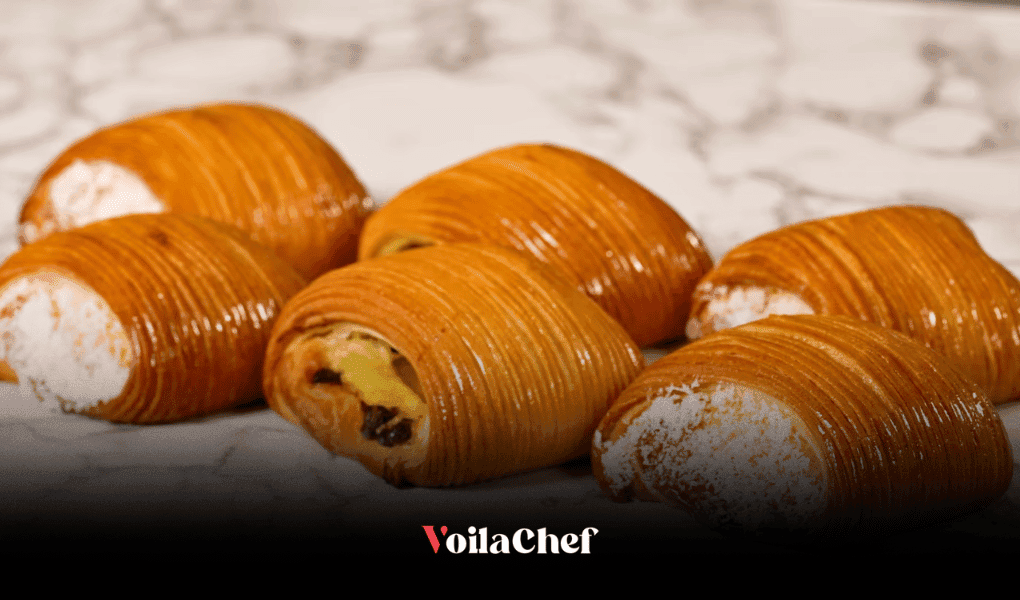
You may be craving that familiar experience at home: the warm smell of butter, crisp flaky layers, and a soft, tender center that defines a truly good croissant.
Good news: croissant dough isn’t reserved for bakery windows. This guide walks you through each step with calm, precision, and care, so you can understand every gesture without ever feeling overwhelmed.
Imagine the dough under your fingers—cool, supple, slightly elastic—then the well-chilled butter spreading into thin layers. In the oven, those layers rise and slowly turn golden, filling the kitchen with that unmistakable, comforting buttery aroma.
A key insight to keep in mind: a successful croissant depends far more on balance—temperature, resting time, and lamination—than on strength or speed.
In this guide, you will discover:
- how to prepare the détrempe, the dough base
- how to incorporate the butter and laminate the dough
- why resting times matter and how to use them
- shaping the croissants before baking
Take a moment, take the butter out of the fridge, breathe deeply you’ll see that making croissant dough can become a calm, almost meditative ritual.

1. Preparing the détrempe, the supple and living base of the dough
The détrempe is the heart of croissant dough. It’s what receives the butter and allows those fine flaky layers to form. In a large bowl, the flour gathers into a pale mound, almost powdery, ready to absorb the liquid.
When you add the cold milk, then the water, the dough begins to come together gently. It feels sticky at first, then gradually smoother as you mix. Salt provides structure, while sugar subtly softens the fermentation.
Kneading is intentionally kept minimal. You simply work the dough until it becomes uniform, without chasing too much elasticity. Over-kneading would make it tense and difficult to roll. Under your hands, you should feel a supple, slightly cool dough that barely sticks.
Once formed, the détrempe must rest. This rest is essential: gluten relaxes, the dough breathes, and the texture becomes more cooperative. After resting, you’ll notice it stretches easily without resistance—your sign that it’s ready for the next step.
If you’d like to deepen your understanding of these fundamentals, an online pastry course can be extremely helpful for visualising how laminated yeasted doughs behave.
Key points:
- lightly kneaded détrempe
- supple, cool texture
- essential rest before lamination
2. Laminating butter: texture, temperature, and precision
Butter is the soul of the croissant. It must be cold yet pliable—neither brittle nor soft. When gently tapped with a rolling pin, it softens and becomes almost plastic, ready to be enclosed in the dough.
Visually, the butter should form a clean rectangle with smooth edges and no cracks. To the touch, it’s firm but yields gently under pressure. This balance ensures even lamination. Too hard, it will tear the dough. Too soft, it will leak out.
Roll the détrempe into a shape slightly larger than the butter. The movement is slow and fluid, almost calming. Place the butter in the centre and fold the dough over it like an envelope. This moment is crucial: dough and butter should be at similar temperatures so they work together without merging.
As you roll, you’ll feel a gentle resistance under the pin—a sign that dough and butter are moving as one. The soft, rhythmic sound of the rolling pin marks the true beginning of lamination.
Helpful tips:
- butter at 12–14 °C (54–57 °F)
- dough and butter at similar temperatures
- slow, steady movements
3. Lamination: creating thin, airy layers
Lamination consists of folding and rolling the dough to create successive layers of dough and butter. From the very first turn, faint marbled lines appear—an early sign that the structure is forming.
Each turn is done calmly. You roll gently, fold, then allow the dough to rest. Resting is just as important as the gesture itself: it lets the butter firm up and the dough relax, preventing tears.
To the touch, the dough becomes smoother, almost silky. It stretches easily without shrinking back. Visually, the edges stay clean and defined—clear proof of even lamination.
Between each turn, wrap the dough and place it in the fridge. This temperature contrast is what later creates that airy flake, where each layer separates beautifully during baking.
After the final turn, press lightly with a fingertip. The dough should hold the imprint briefly before slowly springing back—your cue that it’s ready for shaping.
Good to know:
- three single turns are sufficient
- rest between every turn
- always work with cold dough
4. Shaping and final proof before baking
The dough is now ready to be cut. As you roll it out, you’ll feel that controlled suppleness under the pin, promising good oven rise. The triangles cut cleanly, without dragging or tearing.
Shaping croissants is a delicate gesture. Gently stretch the tip, then roll without tightening, leaving space for the layers to expand. Under your fingers, the dough feels cool, lightly buttery, and pleasant to handle.
Next comes the final proof. The croissants slowly puff up, becoming paler and lighter to the touch. As you lean closer, a subtle yeasty aroma emerges—an encouraging sign of proper fermentation.
Baking transforms everything. Butter melts, steam forms, layers lift. The croissants turn a golden, lightly amber colour, and the kitchen fills with that unmistakable scent.
Out of the oven, the pastry crackles softly when pressed. Inside, the crumb is tender and honeycombed—exactly what you were hoping for.
In short:
- shape without tightening
- slow, controlled proofing
- baking reveals the flake
Conclusion
Making croissant dough takes time, but above all it asks for attention and enjoyment in every gesture. By respecting textures, temperatures, and resting times, you’ll achieve croissants that are light, crisp, and deeply satisfying. And if you’d like to go even further in mastering lamination, an online pastry course can support your progress with calm and confidence.