Blog / 20 January 2026
Homemade puff pastry recipe
Learn how to make light, crisp homemade puff pastry with simple, sensory, beginner-friendly gestures explained step by step
Sandra Zwingelstein
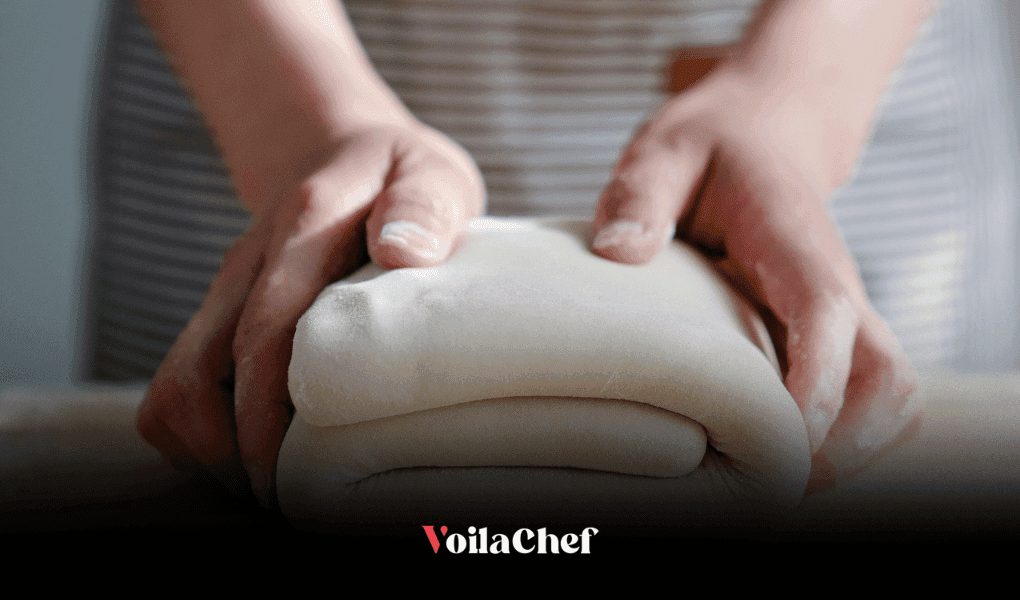
You may have already felt that small hesitation when facing a puff pastry recipe, thinking it must be too technical, too time-consuming, or reserved for professionals.
Good news: homemade puff pastry is not an inaccessible mystery. With method, calm, and a few clear reference points, it becomes a soothing, almost meditative experience, where every gesture has a purpose and nothing is rushed.
Imagine the cool texture of the dough under your fingers, the firm butter spreading silently, layer after layer forming slowly. In the oven, a warm, enveloping buttery aroma fills the air, and the pastry rises into hundreds of golden, crisp sheets.
A gentle knowledge bomb: puff pastry relies on one simple principle trapping butter in thin layers so that water vapor creates lift during baking.
In this article, you will discover:
- the essential basics to understand puff pastry
- a stress-free, step-by-step recipe
- the gestures that truly make the difference
- how to avoid the most common mistakes
Take a deep breath, lightly flour your work surface, and let yourself be guided: puff pastry is built slowly, but with immense satisfaction.

1. Understanding puff pastry before you begin
Before even touching the flour, it’s helpful to understand what you’re about to create. Puff pastry is a living dough that reacts to temperature, touch, and rhythm. Above all, it asks for gentleness never haste.
Its structure relies on a precise alternation: a simple dough called the détrempe and cold butter for lamination. With each turn, the dough is folded to create thin layers. The more even these layers, the lighter, airier, and crisper the final pastry will be.
What often surprises people most is the role of cold. Dough that’s too warm becomes sticky, the butter escapes, and layers merge. By contrast, a well-rested dough stays supple, easy to roll, almost silent under the rolling pin. You can feel everything moving smoothly, without resistance.
Patience is therefore your greatest ally. Between each turn, resting allows the gluten to relax and the butter to firm up. These pauses are not a constraint they’re what ensure a clean, regular, and successful lamination.
Good to know:
- puff pastry loves cold conditions
- butter must stay firm yet pliable
- consistency matters more than force
2. Making the détrempe: the supple base of lamination
The détrempe is the foundation of the entire recipe. It should be smooth and even—neither too dry nor too sticky. In a bowl, the flour forms a pale, silky cloud, while cold water immediately brings a refreshing sensation.
As you mix gently, the dough comes together—slightly rough at first, then gradually more supple. The salt dissolves, the flour hydrates, and the mass becomes pleasant to handle. The gesture is simple, almost instinctive, and requires no intense kneading.
Once gathered, place the dough on a lightly floured surface. Under the palm, it feels cool, slightly elastic, but never tight. Shape it into a cross—this small detail will later make enclosing the butter much easier.
This stage matters greatly. An overworked détrempe becomes elastic and difficult to roll. Here, the goal is softness and restraint, as if the dough already senses what will be asked of it next.
Before going further, the dough deserves a rest in the refrigerator. Wrapped and resting, it relaxes while you prepare the butter. This pause already transforms the texture it becomes calmer, more cooperative under your hands.
Helpful tips:
- use very cold water
- avoid over-kneading
- rest for at least 30 minutes
3. Lamination: creating layers, one fold at a time
Lamination is the heart of puff pastry. This is where the magic quietly happens. The butter, gently flattened, is placed at the centre of the détrempe. It’s cold yet supple, almost velvety to the touch.
By folding the arms of the dough over it, you seal the butter inside like an envelope. The rolling pin then takes over. Movements are slow and steady, and the dough stretches without tearing. You can feel the butter sliding within, spreading into a fine, even layer.
Each turn consists of folding the dough and rolling it again. Layers multiply hidden to the eye, but very real. At this point, the dough becomes cooler and slightly tense, a sign it needs rest.
These pauses are essential. In the refrigerator, the dough relaxes, the butter firms, and everything settles. When you resume, it’s a pleasure: the rolling pin glides, the dough responds, and the movement becomes fluid and reassuring.
Traditionally, six single turns or four double turns are used. There’s no need to obsessively count the key is regularity and the feeling that the layers remain well defined.
If you’d like to refine this essential gesture, revisiting the fundamentals through an online pastry course can greatly boost confidence and precision.
Quick tips:
- work on a well-floured surface
- rotate the dough a quarter turn after each fold
- never force with the rolling pin
4. Using and baking puff pastry successfully
Once lamination is complete, the puff pastry is ready to use—but it always benefits from one final rest. Chilled, it becomes a joy to cut: clean, sharp, almost surgical under the knife.
During the final rolling, the difference is immediately noticeable. The dough is smooth, cold, and even. It doesn’t stick or shrink—clear signs that the work has been done properly. Each pass of the rolling pin is silent and controlled.
In the oven, the show begins. Heat melts the butter, water turns to steam, and the layers lift. The oven fills with a deep, buttery aroma, slightly caramelised. The pastry turns golden, crisp on the outside, light within.
For optimal lift, a hot oven is ideal. The thermal shock allows the pastry to rise quickly. You’ll see the edges separate into thin, irregular sheets—a hallmark of successful puff pastry.
Whether for a tart, savoury pastries, or a galette, this dough becomes a versatile, elegant base that’s always rewarding. And the more you practise it, the more intuitive it becomes.
In brief:
- chill well before baking
- use a hot oven for clean lift
- cut cleanly without crushing edges
Conclusion
Making homemade puff pastry means accepting a slower pace feeling each gesture and watching the gradual transformation of the dough. With a little patience and practice, it becomes a powerful ally in the kitchen. And if you feel like going even further, an online pastry course can gently accompany your next creations.