Blog / 9 December 2025
How to make a mirror glaze?
Discover how to make a Mirror Glaze that’s smooth, ultra-glossy, and easy to pour for your entremets and cakes.
Sandra Zwingelstein
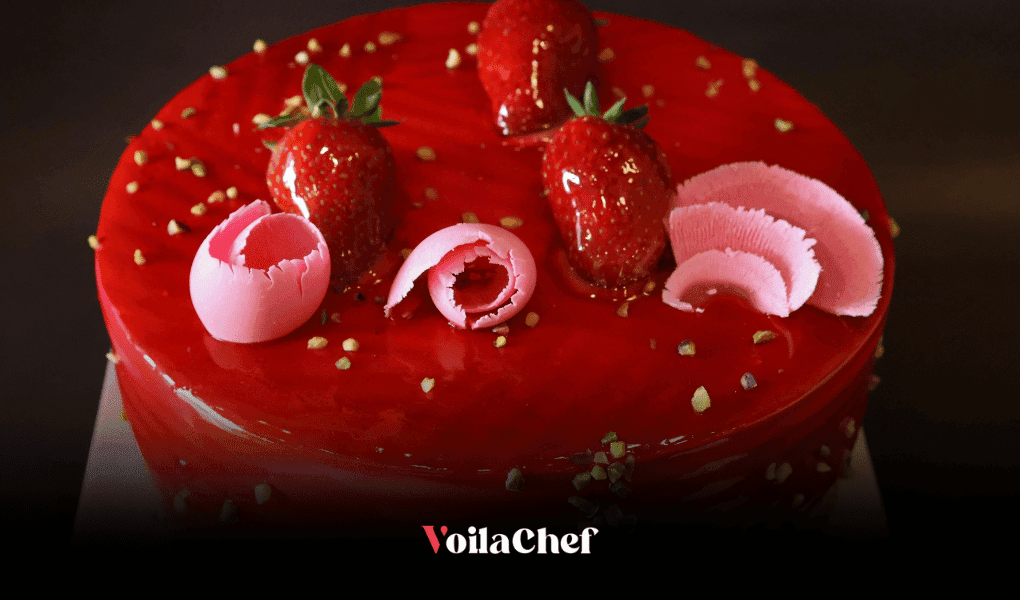
You dream of that ultra-glossy, almost mirror-like coating the one that covers an entremets with a perfectly smooth veil and instantly gives the impression of a professional dessert… even when made at home.
Good news: this guide will walk you through, gently and step by step, to achieve a mirror glaze that pours easily and delivers that elegant effect we love so much in pastry.
Imagine a still-warm coating, deep brown, sliding slowly over a well-chilled entremets. You see the chocolate tighten, set, and reveal a lacquered surface, almost like a pool of light. The texture is thin, soft, and slightly springy under the spoon.
A useful tip: the success of mirror glaze relies primarily on temperature and gelling—two key factors that determine its shine and how nicely it clings to the entremets.
In this article, you’ll discover:
- The Exact Composition Of A Successful Mirror Glaze
- The Sensory Cues That Change The Final Result
- The Ideal Temperatures For Pouring A Flawless Glaze
- How To Fix A Mirror Glaze That’s Too Runny, Too Thick, Or Dull
Settle in for a moment and let yourself be guided: you’ll see that making a mirror glaze isn’t magic just a few gentle gestures to master.
1. Understand the foundation of mirror glaze: what gives it shine and texture
A mirror glaze is a fascinating preparation. It looks like a simple chocolate sauce, but every ingredient plays an essential, almost choreographed role in creating that ultra-smooth, glossy texture we often see in high-end pastry.
- Chocolate provides structure and depth of color. As it melts, a warm cocoa aroma emerges, reminiscent of ganache. Watch it turn supple, then fluid—revealing its potential to become a “mirror.”
- Cream or milk brings a more unctuous, satiny feel. When hot cream meets chocolate, there’s a slow, pleasing fusion as the surface becomes progressively velvety an important sensory step that already hints at the final shine.
- Gelatin stabilizes the mixture. Dissolved in a hot liquid, it becomes invisible yet creates that taut, perfectly smooth surface without any roughness. Without gelatin or a gelling alternative you simply can’t achieve that impeccably glazed finish on an entremets.
- Sugar and glucose add extra shine. The syrup turns clear and slightly viscous, helping light reflect better off the glaze once poured. Without this sugary base, the surface would remain more matte, more dull.
If you enjoy understanding textures and chocolate reactions, an online pastry class can be a valuable resource to visualize the movements you’ll use here.
Good to know:
- Gelatin Provides Structure
- Sugar Enhances Shine
- Chocolate Builds The Glaze
2. The classic mirror glaze recipe: the sensory gestures that make the difference
The classic mirror glaze uses a hot mixture of cocoa, sugar, cream, and gelatin. When you start heating water with cocoa and sugar, an intense chocolatey aroma rises, almost steamy. Notice the texture: thick at first, then smoother as heat homogenizes the mixture.
Once it reaches a boil, it becomes more syrupy, shiny almost like a ready-to-use coating. When you pour it over hot cream, the color deepens. The liquid transforms; the surface looks denser and very uniform. It relaxes like a canvas being smoothed with care.
Pre-soaked gelatin melts instantly on contact with the hot mixture. You won’t hear anything, but visually the preparation lightens slightly and becomes even more fluid. This is the precise moment when the glaze gains its future gloss.
Let the final mixture rest and cool to 30–32 °C. At this temperature, texture matters most: dipping in a spoon, you’ll see a slow, soft ribbon fall back with pronounced shine. That sensation is an excellent indicator: too hot and the mirror glaze will be runny; too cold and it will be thick and leave marks.
When you pour the glaze over a perfectly frozen entremets, the magic happens. The glaze tightens, sets almost instantly, and forms that mirror finish you admire in pastry shop windows. Tiny reflections even your silhouette are normal: they’re signs your glaze is spot on.
Quick tips:
- Use A Thermometer For Pouring
- Hydrate Gelatin Properly
- Strain The Glaze Right Before Use
3. Temperature chart & observable textures
A clear quick-reference to visualize the relationship between temperature, texture, and best use:
| Temperature | Observable Texture | Ideal Use |
|---|---|---|
| 60–70 °C | Fluid, Very Runny, Hot | Preparation, Combining Ingredients |
| 40–45 °C | Syrupy, Shiny, Supple | Early Cooling |
| 30–32 °C | Nappant, Fluid Yet Thick | Perfect Pouring Over Entremets |
| 25–28 °C | Dense, Thickened | Too Cold; Risk Of Track Marks |
In short:
- Ideal Pouring Range: 30–32 °C
- Shine Peaks Mid-Cooling
- Very Cold Entremets Is Essential
4. How to fix a failed mirror glaze (dull, too runny, too thick, bubbles)
Even with good technique, a mirror glaze can surprise you. A heat fluctuation, too much water, or vigorous mixing and the texture shifts. Don’t worry: each issue has a simple, often quick fix.
- Too Runny: Usually too hot. You’ll notice a very fluid texture, almost transparent on the edges as you pour. Wait a few minutes; as it cools, the glaze thickens, stabilizes, and regains its nappant quality.
- Too Thick: The ribbon drops fast, almost in clumps, with reduced shine. Add a small trickle of hot water or lukewarm milk to loosen it. You’ll see the change immediately more supple and glossy.
- Dull Finish: Often due to an entremets that isn’t cold enough. The thermal shock fails, and the surface lacks tension. Freeze the entremets a few more minutes. On the next pour, you’ll get a much more mirror-like surface.
- Bubbles: Caused by mixing too vigorously. Blend with an immersion blender while keeping the head fully submerged to avoid air. A fine sieve also helps remove the last tiny impurities.
Helpful reminders:
- Cooling Too Slowly = Dull Glaze
- Overmixing = Bubbles
- Glaze Too Hot = Too Runny

Conclusion
You now have all the keys to make a mirror glaze that’s glossy, fluid, and a pleasure to handle. Take your time, observe the texture, and let these gentle cues guide you: each glaze becomes easier with practice. And if you want even more chocolate techniques, an online pastry course can enrich your craft at a calm pace.