Blog / 9 January 2026
How to make chocolate shavings?
Learn how to make beautiful homemade chocolate shavings fine, even and indulgent with simple gestures and pastry-chef tips.
Sandra Zwingelstein
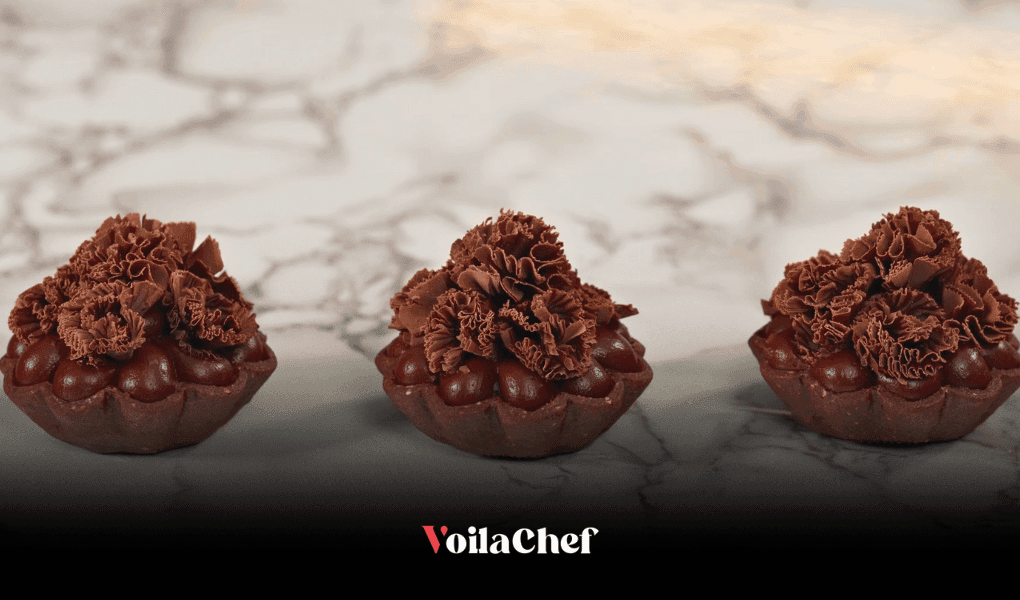
You may have already felt that small frustration when looking at a beautifully assembled cake… that still seems a little bare, as if it were missing a final touch.
Good news: making chocolate shavings is far simpler, more accessible, and more enjoyable than it seems and this article will guide you step by step, gently and clearly.
Imagine fine ribbons of chocolate, lightly curled, delicate to the touch, settling onto a mousse or tart and adding relief, deep colour, and that subtle cocoa aroma that instantly awakens the appetite.
Here’s a valuable little insight: successful shavings depend far less on force than on chocolate temperature and gesture two elements you learn to feel rather than measure.
In this article, you’ll discover:
- how to choose the right chocolate
- simple gestures for beautiful shavings
- several techniques adapted to your equipment
- tips to avoid breakage or melting
Settle in comfortably, take your chocolate in hand, and let yourself be guided you’ll see that the pleasure begins well before tasting.

1. Choosing the right chocolate for clean, even shavings
Before reaching for a peeler or knife, everything starts with the chocolate itself. It determines the sharpness, flexibility, and final look of your shavings. Chocolate that’s too soft will crumble; chocolate that’s too hard will crack instead of forming elegant ribbons.
A good-quality dark chocolate, with around 60–70% cocoa content, is often ideal. It offers the right balance between firmness and melt, allowing shavings to form naturally under pressure. In your hand, the bar should look smooth and glossy, without any whitish marks. This visual detail matters; it indicates healthy crystallisation.
Temperature plays a key role. Chocolate that’s too cold becomes brittle and dry; chocolate that’s too warm turns sticky and melts at the touch. Ideally, work with chocolate at room temperature, around 18–20°C cool to the touch, but never icy. Simply leave it on the work surface for a few minutes so it can gently balance.
The shape of the chocolate also matters. A thick bar is more pleasant to work with than a very thin one. The blade or peeler can glide continuously, creating longer, more elegant shavings. You can feel the difference immediately in the gesture: movement becomes smoother, almost instinctive.
To remember:
- choose good-quality dark chocolate
- avoid chocolate that’s too cold or too soft
- work at room temperature
2. The classic vegetable peeler method: simple and effective
The most familiar method for making chocolate shavings uses a tool almost everyone has in a drawer: a vegetable peeler. This technique is popular because it’s quick, intuitive, and produces natural, slightly irregular shavings that look beautiful.
Place the chocolate bar flat on a board or directly on your work surface. When you rest the peeler blade on the surface, you’ll feel a slight resistance like a promise. Pull gently, and the chocolate lifts and begins to curl in on itself. The movement is slow, almost caressing, never abrupt.
You’ll notice that pressure makes all the difference. Too much pressure breaks the chocolate; too little creates simple fragments. By adjusting gradually, you find the sweet spot: the shaving forms into a thin ribbon, slightly wavy, with clean edges. As the chocolate separates, its colour becomes more matte an encouraging sign that it’s being worked correctly.
It’s completely normal if the first shavings aren’t perfect. Take a moment to observe their shape, adjust the blade angle, breathe. Very quickly, the movement becomes more confident, almost automatic. Shavings accumulate lightly and release a soft, intense cocoa aroma.
To prevent the warmth of your hands from melting the chocolate, you can hold it by the sides or use a small piece of baking paper. This small detail immediately improves comfort and consistency.
Helpful tips:
- pull the peeler toward you slowly
- adjust pressure instead of forcing
- avoid prolonged contact with your fingers
3. Other methods: knife, grater, and tempered chocolate
The peeler isn’t the only option. Depending on the desired look and the tools you have, other techniques offer equally interesting textures. A wide knife, for example, creates broader, flatter shavings perfect for elegant desserts.
With a smooth-edged knife, the gesture is similar to the peeler but requires a bit more control. By slightly angling the blade, you gently scrape the chocolate surface. The shaving detaches slowly, sometimes longer, sometimes thicker. The soft sound of metal against chocolate is almost soothing, a sign that the texture is just right.
A grater produces shorter, finer shavings closer to coarse powder. This method is ideal for dusting a dessert or creating an even layer. The sensation is quicker, more mechanical, but very effective for covering larger surfaces.
For the more curious, lightly tempered chocolate allows for very regular shavings, with crisp shine and excellent hold. This technique requires more precision, but the result is striking. The shavings keep their shape even at room temperature and bring a professional finish.
These approaches show that shavings aren’t just decoration—they’re a true textural element. In pastry, every detail matters, and understanding these nuances greatly enriches your practice. Once again, an online pastry course can help explore these subtleties with confidence.
Good to know:
- knife: wide, elegant shavings
- grater: fine, quick shavings
- tempered chocolate: optimal hold
4. Storage, use, and common mistakes to avoid
Once your shavings are ready, questions of use and storage naturally arise. Chocolate shavings are delicate sensitive to heat and humidity but with a few precautions, they retain all their beauty.
Ideally, add shavings to your dessert at the last moment. Their light, airy texture contrasts perfectly with cream or mousse. Letting them fall gently from your fingers, you feel that fragile, almost flaky sensation that instantly adds visual interest.
To store them for a few hours, place them in an airtight container, away from light and heat. Avoid the refrigerator, as humidity can cause a whitish bloom. A cool room is more than enough. You’ll see they keep their shape and aroma without trouble.
Among common mistakes, working with chocolate that’s too cold is probably the most frequent. Shavings snap cleanly, without elegance. On the other hand, chocolate that’s too warm sticks to the blade and loses definition. Observation and touch are your best guides: chocolate should be supple, never soft.
Finally, remember that shavings don’t need to be perfect. Their charm also lies in irregularity in their living, organic feel. Each dessert tells a different story, and these small variations make the result more authentic.
Quick tips:
- add shavings at the last moment
- store away from heat
- prioritise gesture over perfection
Conclusion
Making chocolate shavings is a simple, almost meditative gesture that brings real elegance to your desserts. Take time to observe, feel, and adjust, and let the chocolate guide you. And if you feel like going further, an online pastry course can become a valuable companion for refining those small gestures that make all the difference.