Blog / 3 December 2025
How to make a chocolate glaze?
Learn how to make a smooth, glossy, easy-to-spread chocolate glaze to elevate your cakes. Chef tips, sensory cues, and practical tricks.
Sandra Zwingelstein
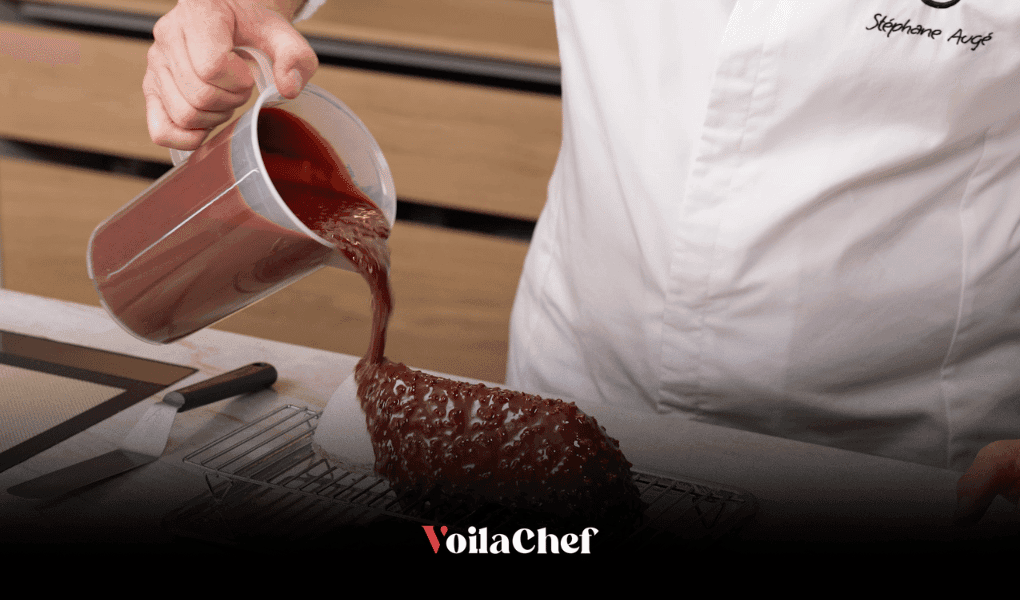
You may have felt this urge before: to cover a cake with a perfectly smooth, glossy chocolate glaze the kind that turns a simple dessert into a small moment of proud indulgence.
Good news: this guide will walk you through the process step by step gently so you can achieve that result without stress, using simple, confidence-building gestures.
Imagine the chocolate melting slowly, turning silky, thickening just enough… then that warm, shiny layer sliding softly over the cake, leaving behind an even, almost hypnotic surface.
A helpful note: a successful chocolate glaze mainly depends on two things heat control and the chocolate/liquid balance. When those two are in harmony, the chocolate glaze practically makes itself.
Here’s what you’ll discover:
- The fundamentals to truly understand how a glaze forms
- Two reliable methods: chocolate ganache and a glossy chocolate glaze
- Sensory cues that genuinely improve the result
- How to fix a glaze that’s too runny, too thick, or grainy
Take a breath, get comfortable… you’ll see that making a good chocolate glaze is mostly about feel and a gentle patience.

The essential basics of a successful chocolate glaze
When you make a glaze, you’re working with a living material: chocolate. It reacts to heat, to cream, to butter… and even to how you stir. When heated, it becomes fluid, a bit runny; as it cools, it returns to a dense, creamy texture.
The first thing to understand is that melted chocolate on its own tends to thicken again very quickly. It clings a little to the spoon, leaves marks, and doesn’t yet give that dreamy shine. Adding hot liquid transforms it into a more supple, smooth preparation almost like a small, glossy cream.
A second key player is butter. A small knob is enough to bring a beautiful satiny touch, like a shiny veil that forms instantly on the surface. This simple step yields a stable chocolate glaze that sets nicely without dulling.
At this point you can already picture your spatula gliding through the mixture: it turns smooth, almost velvety, with no grains or snags. This feel matters—it tells you the texture is ready.
For those who enjoy refining delicate techniques, an online pastry course can help you understand in finer detail how chocolate behaves at different temperatures.
To remember:
- chocolate alone thickens as it cools
- cream brings suppleness and homogeneity
- butter adds shine
Method #1: Chocolate ganache glaze (simple, gentle, perfectly smooth)
Chocolate ganache is probably the most reliable method, especially if you love a melting texture thick yet fluid that gently coats the cake. Start by chopping the chocolate: it cracks lightly, releasing a warm cocoa aroma. Meanwhile, the cream heats, releasing a soft wisp of steam.
When you pour the hot cream over the chocolate, you may hear a faint whisper, as if the two ingredients are responding to each other. The chocolate starts to melt into dark, shiny patches. Using a spatula, your movements are slow: stir from the center outward, and the mixture gradually turns silky, then smooth, then just the right kind of sticky.
The ideal ganache glaze texture forms a soft ribbon that falls back slowly and leaves an even surface behind it. If you wait a few minutes, the ganache thickens slightly, making it perfect for coating your cake without running too fast.
If you’re covering a flat-topped cake, pour the ganache in the center: it flows gently, like a creamy wave, then slides toward the edges. By tilting the cake delicately, it stretches and settles into a lustrous finish with little effort.
Quick tips:
- pour the cream in two additions for better control
- stir slowly to avoid bubbles
- let it rest a few minutes to reach the right density
Method #2: Glossy chocolate glaze (butter + powdered sugar)
This method yields a more mirror-like glossy chocolate glaze perfect for special-occasion cakes or whenever you want a truly clean visual finish. First, the chocolate melts with a little water or milk: the texture becomes pourable, almost silent, with a warm, enveloping aroma.
When you add powdered sugar, the mixture thickens all at once. It turns more opaque, more compact, yet paradoxically easier to smooth. The mixing motion is delicate but very satisfying: the surface becomes uniform, like a coating taking shape before your eyes.
Butter then arrives to “polish” the texture. As soon as it melts, it lends a satiny shine, as if someone were passing a soft cloth over a mirror. The chocolate glaze becomes elastic and fluid, gliding perfectly over the cake.
This easy chocolate glaze is ideal for chocolate cakes, simple entremets, loaf cakes, or brownies. As it cools, it leaves a thin, lightly crisp surface layer a small sensory pleasure many adore.
In short:
- More intense shine than ganache
- Fluid texture that’s easy to spread
- Adapts to many cakes
How to rescue a failed chocolate glaze?
Even with care, a glaze can surprise you. Too runny, too thick, grainy… nothing is unfixable. Often, a small adjustment is all it takes.
A chocolate glaze that’s too runny simply lacks chocolate or dry matter. By adding a bit of melted chocolate, the texture tightens: it becomes creamier, denser, and the surface smooths out on its own.
A glaze that’s too thick needs a little warmth. A trickle of hot water or hot cream is enough to loosen it. You’ll see the mixture become more supple, as if it’s breathing again. The hot/cold contrast reactivates the cocoa butter, which relaxes instantly.
A grainy glaze usually indicates overheating. In that case, gently reheat over a bain-marie while stirring slowly. The grains gradually disappear, and the texture returns to silky as if reorganizing itself.
Here’s a quick recap table to help you adjust textures:
| Problem | Sensation | Gentle fix |
|---|---|---|
| Too runny | runny, doesn’t cover well | add melted chocolate |
| Too thick | pasty, sets too quickly | add hot liquid |
| Grainy | visible small grains | rewarm very gently |
Good to know:
- overheated chocolate becomes unstable
- adding cold liquid can “seize” the mixture
- patience is often the best adjustment
Conclusion
You now have everything you need to make a chocolate glaze that’s simple, glossy, and truly pleasant to work with. Take your time, feel the texture under the spatula, and let the chocolate guide you… it always responds gently when you proceed calmly. And if you want to improve your technique even more, an online pastry course can become a valuable companion on this delicious path.