Blog / 8 June 2025
Pectin in Pastry: Role, Uses, and Pro Tips
Making jam or fruit jellies? Wondering which pectin to use? Discover the types, applications, and expert tips in this complete guide!
Sandra Zwingelstein
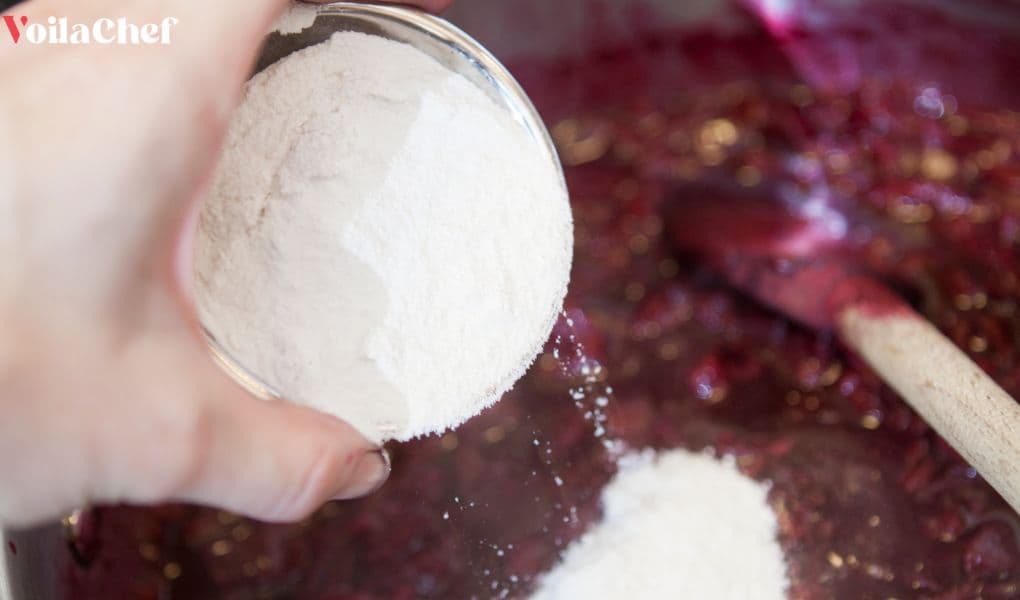
Are you making jams, fruit pastes, or a glossy glaze and wondering which pectin is right? You’re in the right place!
Pectin is a natural gelling agent essential in pastry. Depending on the type, it affects texture, hold, shine, and flavor. Used in jams for centuries, pectin is now a key player in modern pastry.
Faced with different types—HM, LM, NH—it’s easy to get lost. Choosing the wrong one can alter your recipe’s outcome. Here’s how to choose and use it correctly!
In this guide, you'll learn:
- What pectin is and where it comes from
- The different types of pectin and their specificities
- How to use it properly in various recipes
- Mistakes to avoid and pro chef tips
- How pectin compares to other gelling agents
Whether you're a passionate amateur or a pro, this article will help you master pectin like a chef. Enjoy the read!
What Is Pectin?
Definition and Natural Origin
Pectin is a natural fiber found in fruit—especially in apples, quinces, and citrus fruits. It’s located in the peel, seeds, and membranes. Historically, it was made at home by boiling apple peels; today, it’s also sold as a powder or gel. It’s 100% plant-based, safe, and widely used in baking.
Role in Fruit
Pectin acts as the glue holding fruit cells together, helping young fruit stay firm. As fruit ripens, pectin breaks down and the texture softens. In recipes, it thickens and gels mixtures.
Types of Pectin
High Methoxyl Pectin (HM)
The most common type in pastry. Requires sugar and acid (like lemon juice) to gel. It creates firm, shiny textures—great for jams, glazes, and fruit inserts.
- Rapid set: gels quickly, ideal for jarred jams
- Slow set: allows more time to mold before setting
Low Methoxyl Pectin (LM)
Needs calcium—not sugar—to gel. Perfect for low-sugar or sugar-free recipes. Used in soft-textured jellies, glazes, and plant-based confections. Heat-stable and flexible.
Pectin NH
A favorite for glazes and modern pastry. Reversible with heat—melt, reset, adjust! Works well with less sugar and some acidity. Creates elastic, shiny textures. Often mixed with sugar to avoid lumps.

How Pectin Is Used in Pastry
Jams and Jellies
HM pectin + lemon juice = a fast, firm set that preserves fruit flavor and color. LM pectin works well in lighter, fruit-forward spreads with less sugar.
Fruit Jellies
For pâte de fruits, use yellow or NH pectin for a firm, chewy texture that showcases real fruit flavor.
Glazes
Pectin NH gives glossy, flexible finishes for fruit tarts and entremets. Protects and beautifies.

Using Pectin Like a Chef
Dosage and Incorporation
Use 0.5–2% of the total weight (5–20g per kg). Mix with sugar before adding to prevent lumps. Boil to activate. NH pectin allows later adjustments.
Temperature and pH
- HM pectin needs high heat and acid (pH 2.8–3.5)
- NH gels around 85°C
- LM works with calcium, even in low-acid recipes
Pectin vs. Other Gelling Agents
Pectin vs. Gelatin
- Origin: Pectin = plant-based; gelatin = animal-based
- Texture: Pectin = firm & shiny; gelatin = soft & jiggly
- Activation: Pectin needs heat + acid/calcium; gelatin just needs melting
- Melting point: Pectin resists heat; gelatin melts easily
Pectin vs. Agar-Agar
- Origin: Pectin = fruits; agar = red algae
- Texture: Pectin = smooth; agar = firm & brittle
- Activation: Agar sets as it cools, after boiling
- Reversibility: NH pectin is heat-reversible; agar is not
Chef Advice: How to Choose the Right Pectin
- HM pectin: for traditional sugary jams
- LM pectin: for low-sugar or diet recipes (needs calcium)
- NH pectin: for glazes, fruit inserts, and soft jellies
Read product labels carefully—some “universal” pectins don’t suit every use.
Chef tip: Keep several types on hand. Like spices, each pectin has its own purpose!
7 Pro Tips for Success
- Always mix pectin with sugar to prevent clumping
- Boil properly to activate (usually 100–105°C)
- Add acid late for HM pectin, right before setting
- Don’t overcook—it breaks down pectin
- Test set with a cold plate—if it doesn't run, it's ready
- Cool quickly for clean, glossy results
- Store well—pectin-based products freeze well (especially NH)
Master Pectin Like a Pastry Pro!
You now understand what pectin is, how it works, which types to use, and how it compares to other gelling agents. With these tips, your jams, glazes, and jellies will reach pastry chef standards!
Want to go further and learn directly from French pastry experts?
VoilaChef offers 100% online video courses from over 35 renowned pastry chefs.
→ Start mastering gelling techniques with VoilaChef