Blog / 9 December 2025
How to use sheet gelatin?
Learn how to use sheet gelatin correctly with simple, sensory, precise gestures to master mousses, entremets, and glazes.
Sandra Zwingelstein
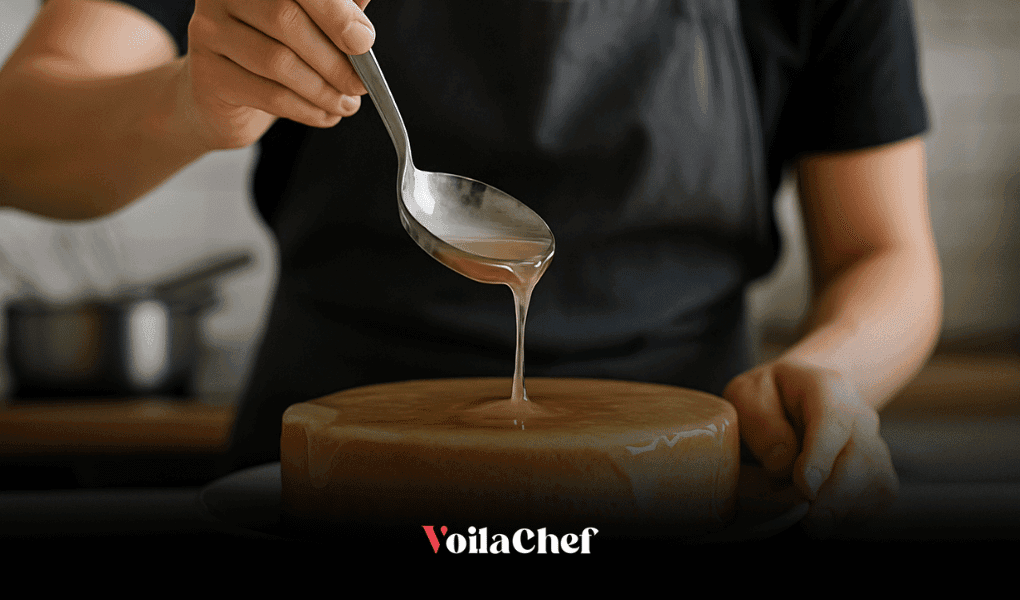
You may have held those fine, transparent sheets slightly rough between your fingers wondering how to turn them into a supple, melt-in-the-mouth, perfectly smooth texture in your desserts.
Good news: this guide will walk you through gently, step by step, so each gelatin sheet becomes a simple, confidence-boosting gesture.
Imagine a light mousse that trembles delicately at the slightest movement, an entremets that holds with silky firmness, or a glaze that slides over your cake like a caress. Once used well, sheet gelatin brings this near-invisible magic you can feel.
A quick technical note: gelatin works thanks to its gelling power that activates after hydration and gentle heat. A simple process… that benefits from a few right moves.
In this article, you’ll discover:
- How To Hydrate, Dissolve, And Incorporate Gelatin Sheets
- Recommended Dosages For Each Preparation Type
- Common Mistakes That Cause Graininess, Fast Setting, Or Loss Of Strength
- A Summary Table To Go Straight To The Essentials
Take a moment, breathe, and let yourself be guided: you’ll see that sheet gelatin quickly becomes a reliable, almost intuitive ally in the kitchen.

1. Understand how sheet gelatin works: a living material that loves water and gentle heat
Before using it, it helps to understand how gelatin reacts. A dry sheet feels rigid, almost brittle. But the moment it touches cold water, it softens: it turns supple, almost silky, with a pleasant, smooth touch. This simple change is the basis of its gelling power.
As it hydrates, gelatin absorbs water and swells slightly. This stage “awakens” its gelling properties, which reveal themselves later in a warm liquid. Watching the sheet move from firm to pliable is a calm, satisfying moment like a soaked fabric relaxing.
Once hydrated, sheet gelatin needs only brief, gentle heat to melt completely. Press it lightly between your fingers to remove excess water, then slide it into the warm liquid where it disappears, leaving a texture that’s softer, denser, yet still fluid. This contrast—from initial solidity to final flexibility is what makes gelatin so precious.
Good to know:
- Gelatin Activates After Hydration
- Excessive Heat Reduces Gelling Strength
- Cold Water Is Essential To Preserve Structure
2. Hydrate, press, dissolve: the universal step-by-step method
Open the pack and feel the thin, almost crackly gelatin sheet before plunging it into a bowl of cold water. As soon as it’s submerged, it starts to loosen; after a few minutes it becomes soft and slightly gelatinous like a small, wet cloth. This ritual prepares the material perfectly.
After hydration, gently press the sheet between your fingers to remove just enough water. It becomes supple and ready to dissolve. Add it to a warm (not boiling) liquid; it melts quickly, and the mixture takes on a light, satiny shine.
If you add gelatin to warm cream, you’ll see the texture become instantly more unctuous, slightly thicker as if the mixture is structuring itself. Stir slowly to avoid unmelted spots. Once homogeneous, the preparation remains fluid but gains a stability that will show as it cools.
Helpful tips:
- Always Hydrate In Very Cold Water
- Press Gently To Remove Excess Water
- Dissolve Over Gentle Heat To Preserve Bloom Strength
3. The right dosages by use: mousses, entremets, glazes, set creams
Each preparation needs a different texture: an entremets should hold with soft firmness; a mousse should stay light; a glaze should be slightly supple and set just enough to coat a cake without running. Sheet gelatin (typically 200 Bloom) lets you tune these with simple dosage adjustments.
| Preparation | Target Texture | Recommended Dose (200 Bloom) |
|---|---|---|
| Light Mousse | Supple, Airy | 6–8 g/L of total mixture |
| Entremets | Firm Yet Melting | 10–12 g/L |
| Glaze/Nappage | Supple, Shiny | 5–7 g/L |
| Set Cream | Denser, Spoonable | 12–14 g/L |
These values are adjustable to taste. Your eyes and spoon quickly become reliable guides: a cream that thickens slightly when warm will yield a soft set; a denser cream gives a firmer hold.
In short:
- Mousse Needs Less Gelatin
- Entremets Needs A Bit More
- Glaze Requires A Moderate, Precise Dose
4. Common mistakes and how to avoid them (loss of strength, lumps, too-fast setting)
Sheet gelatin can seem fussy, but most issues are easy to fix or avoid with a few simple habits.
- Overheating = Loss Of Strength: Boiling or near-boiling temperatures weaken gelatin, leading to soft sets. Use gentle heat only; the liquid should remain clear and homogeneous.
- Lumps/Graininess: Often from poorly hydrated sheets or water that was too warm. Hydrate only in cold water so the sheet softens evenly and melts perfectly later.
- Too-Fast Setting: Happens when adding gelatin to a mixture that’s already cool. You’ll see thick threads form instantly. Avoid this by slightly reheating the base before incorporation so it stays fluid and blends smoothly.
Quick tips:
- Never Boil Hydrated Gelatin
- Always Hydrate In Cold Water
- Gently Rewarm Bases That Are Too Cold
Conclusion
You now have everything you need to use sheet gelatin with confidence: gentle hydration, calm melting, and smooth incorporation. With a bit of practice, these gestures become natural, almost instinctive. And if you want to deepen your understanding of textures, an online pastry course can take you even further.